


Delay in speech development often worries parents early. It usually starts with silence. A missing sound. A word that never comes. Because of this, parents feel unsure. They wonder if something is wrong.
Many people say delayed talking is normal. Sometimes that is true. However, delay in speech development still needs attention. Little talkers grow at different speeds. Still, watching progress matters.
Understanding Delay in Speech Development
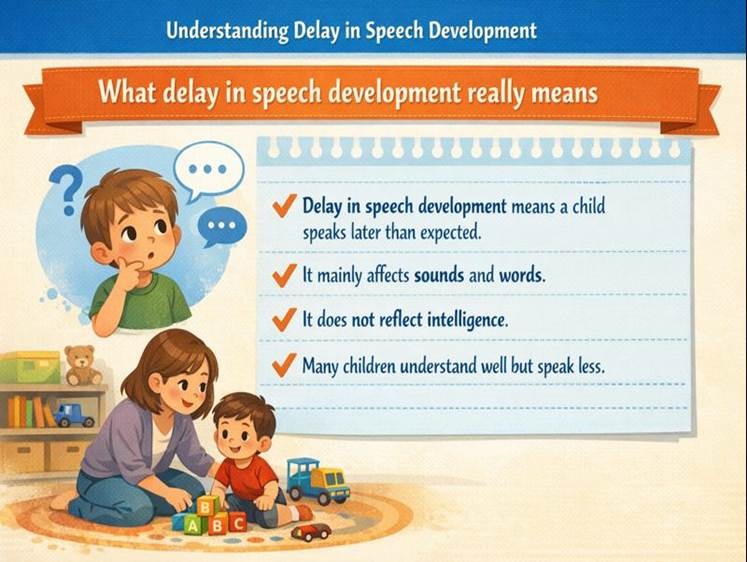
Delay in speech development means a child speaks later than expected for their age. It usually affects sounds and spoken words. However, it does not reflect intelligence or effort. Many children understand language well but struggle to express it.
Because of this, delayed talking can feel confusing for parents. Still, delay in speech development often follows a natural pattern. With observation and early help, many little talkers show steady progress over time.
What delay in speech development really means
• Delay in speech development means a child speaks later than expected.
• It mainly affects sounds and words.
• It does not reflect intelligence.
• Many children understand well but speak less.
Speaking Milestones and Delayed Talking
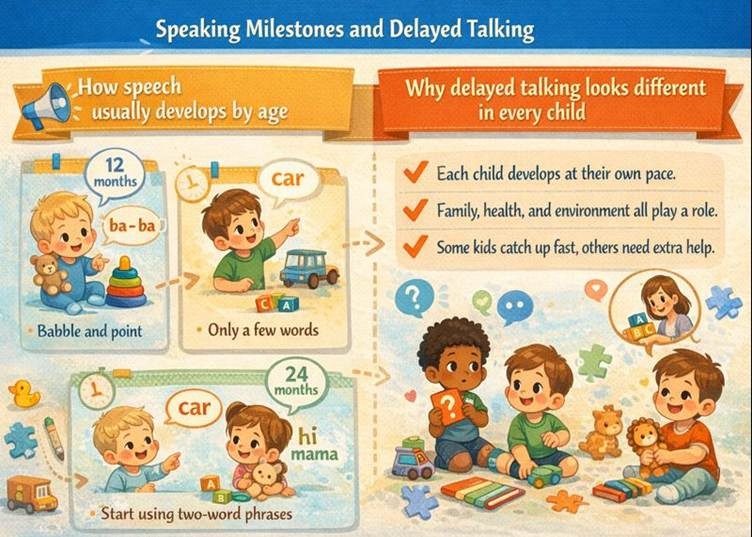
Speaking milestones help parents understand how speech usually develops. For example, most children begin babbling by twelve months. Then, simple words often appear by eighteen months. By age two, many children start using short phrases. However, delayed talking can still happen during these stages.
Because every child grows differently, missing one milestone is not always a problem. Still, when several milestones are missed together, it may point to delay in speech development and a possible speaking delay.
How speech usually develops by age
Speaking milestones help spot delay in speech development early.
At twelve months, children usually babble and point.
At eighteen months, delayed talking may show if words are few.
By twenty-four months, two-word phrases often appear.
Missing one milestone is common. However, missing many may signal a speaking delay. Because of this, early help becomes useful.
Why delayed talking looks different in every child
Delayed talking looks different for each child. Some little talkers gesture more. Others make sounds without words. Some understand everything but speak little.
Speaking milestones guide parents. They do not label children. Delay in speech development shows through slow progress over time.
When Delayed Talking Needs Attention
Delayed talking needs attention when progress stays slow over time. For example, a child may use very few sounds or words. Also, the child may avoid copying sounds or gestures.
Because of this, frustration can increase during communication. However, this does not mean something is wrong. Still, seeking early help at this stage supports growth and reduces stress for both the child and the parents.
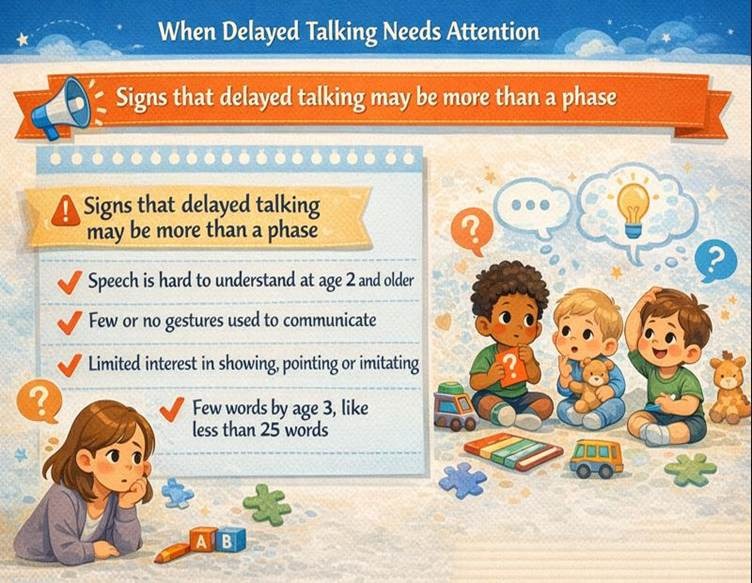
Signs that delayed talking may be more than a phase
Delay in speech development needs attention when sounds are rare. It also matters when imitation is missing. Limited response to name can also signal a speaking delay.
However, panic is not helpful. Early help supports growth gently. Because of this, parents often feel relief after seeking guidance.
Common Causes of Delay in Speech Development
Delay in speech development can happen for many reasons. For example, hearing problems can make it hard for a child to copy sounds. Also, weak mouth muscles can affect clear speech.
Sometimes, developmental differences play a role as well. In addition, limited interaction or too much screen time may slow progress. Because of this, understanding the cause helps parents choose the right early help and support.
Physical and developmental reasons behind a speaking delay
Delay in speech development can have physical causes. Weak mouth muscles can affect speech. Tongue movement limits also matter. Hearing loss is another common cause.
Developmental differences may also play a role. Autism and attention challenges can appear as delayed talking first.
How hearing and environment affect speech development
Environment also matters. Too much screen time reduces interaction. Children learn speech through people, not screens.
Delay in speech development is not caused by poor parenting. Many caring parents face this concern. Early help brings direction.

Why Early Help Makes a Difference
Early help plays a strong role in speech growth. Because the brain develops quickly in early years, support works better at this stage. Also, children learn faster when help begins early.
As a result, delay in speech development often improves more smoothly. So, early help reduces frustration and builds confidence for both the child and the parents.
How early help supports brain development
· Early help strongly supports children with delayed speech development.
· The brain grows very fast in the early years, which makes this the best time to learn.
· Because of this rapid growth, early intervention works especially well.
· Children often improve faster when support starts early.
· Delays in speech development usually respond well to proper guidance.
· Parents learn easy daily ways to encourage speech at home.
· This support also reduces stress and confusion for families.

Delay in Speech Development and Kindergarten Speech
Parents often worry about school readiness. Delay in speech development can affect classroom communication. For example, a child may struggle to share needs. Also, group activities may feel harder at first.
However, early help improves readiness over time. So, many children enter kindergarten speech with better confidence and clearer expression.
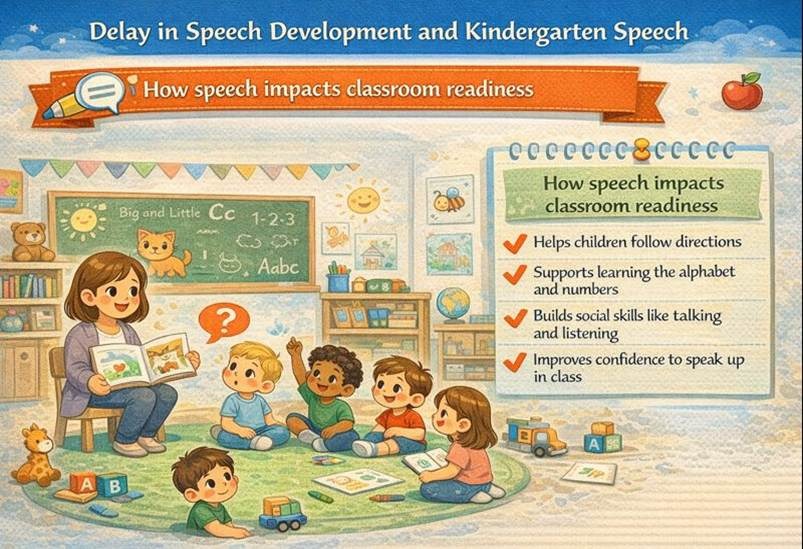
How speech impacts classroom readiness
Parents often worry about delay in speech development before school. Kindergarten speech focuses on simple communication. Children need to express needs clearly.
A speaking delay may affect classroom interaction. However, early learning intervention improves kindergarten speech readiness.
Many children catch up with early help. Because of this, teachers focus on communication, not perfection.
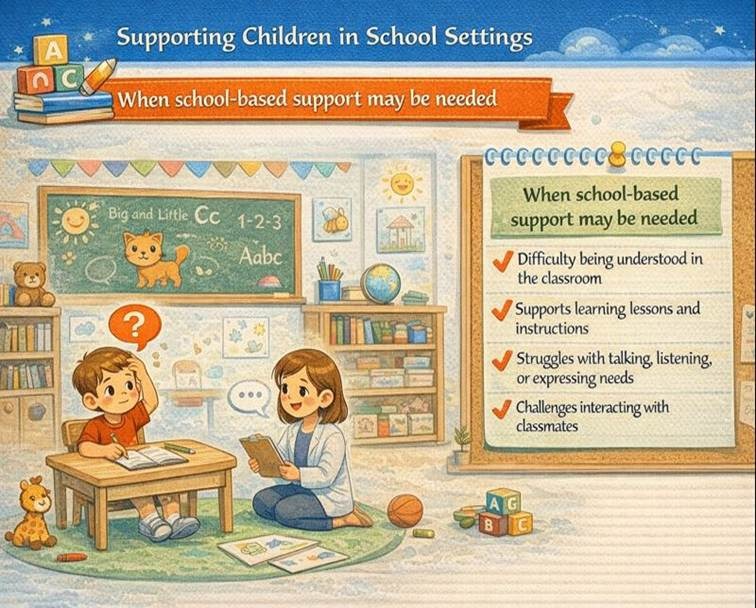
Supporting Children in School Settings
Some children need support in school settings. For example, teachers may offer extra guidance. Also, small group activities can help communication. Because of this, children feel more confident in class. So, these supports protect confidence and encourage steady progress.
When school-based support may be needed
If delay in speech development continues, schools can help. Support plans guide children gently. Because of this, these supports protect confidence.
Kindergarten speech improves when home and school work together. Because of this, long-term issues reduce over time.
Signs That Delay in Speech Development Needs Support
Not every quiet child has delay in speech development. Still, some signs suggest support may help.
- Speech is hard to understand
- Vocabulary remains very limited
- Sounds do not improve with age
- Frustration appears often
- Social interaction becomes difficult
When several signs appear together, delay in speech development should not be ignored.
Little talkers need balance, not pressure.
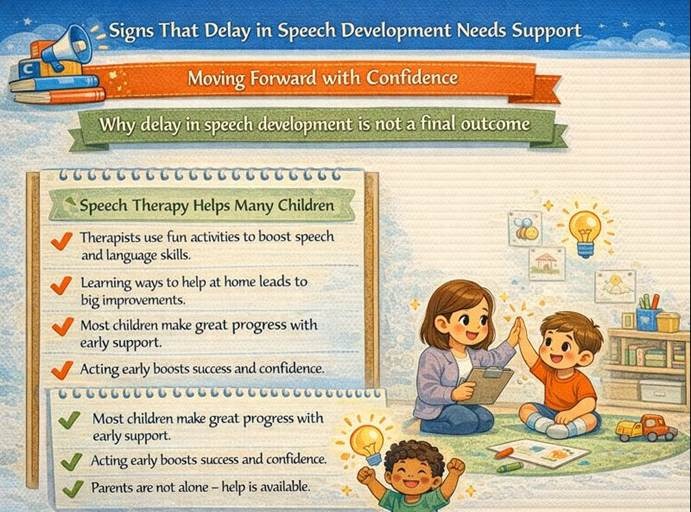
Moving Forward with Confidence
Delay in speech development can feel worrying at first. However, progress is possible with the right support. With early help, children grow well. So, acting early helps parents feel calm.
Over time, confidence builds for both the child and the family. Because of this, delay in speech development becomes easier to manage.
Why delay in speech development is not a final outcome
Delay in speech development is not failure. It is a signal. So, with early help, children grow well.
Delayed talking does not define intelligence. Early learning intervention builds better speaking skills over time.
As a result, parents who act early feel relief. Delay in speech development becomes manageable.
Frequently Asked Questions About Delay in Speech Development
What is the difference between a speech delay and a language delay?
Delay in speech development affects sounds and words. Language delay affects understanding and meaning.
When should parents seek early help for a speaking delay?
If speaking milestones are often missed, seek early learning intervention.
Can delayed talking improve before kindergarten?
Yes. Many little talkers reach strong kindergarten speech with early help.
How can parents encourage speech at home?
Talk slowly. Repeat words. Reduce screens. Build better speaking skills through daily interaction.
Final Reassurance for Parents
Supporting little talkers with patience and confidence
Delay in speech development feels scary at first. Still, progress happens. With early help and patience, children grow. Little talkers often surprise everyone.
The CBD store – cbd gummies 1000mg offers a assortment of formats that fill someone’s needs other preferences, and each undivided feels grandly executed. The unguent appears blameless and consistent, the packaging materials bear long-lasting, and the layout is simple besides elegant. The products are foolproof to stock and travel with, thanks to sheltered lids and compressed sizing. Overall, the kind delivers a outstanding and carefully crafted experience without dispensable extras.