

Plot Diagram Graphic: This is a simple way for kids to visualize the parts of a story and build narrative writing skills that are engaging and fun. The beginning, middle, and end of a story are depicted in a plot diagram, which is also called a story plot chart or story mountain. This type of story structure template makes writing projects for preschoolers a hands-on activity.
In fact, Reading Rockets observes that story maps “give students a tool for recognizing the components of a story” and “help students better understand narrative text.” In this preschool guide, we will explain each part of the plot diagram in kid-friendly language and provide fun ways to teach preschoolers.
What is a Plot Diagram?
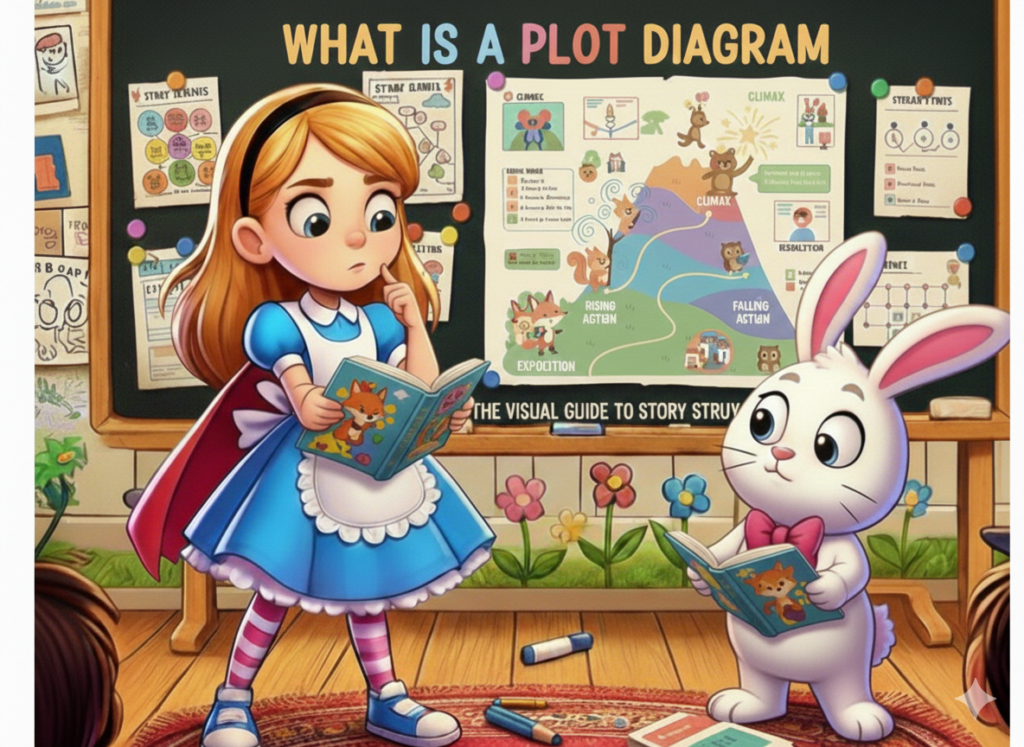
A plot diagram is a type of graphic organizer (usually depicted as a mountain or triangle) that outlines the major events of a story. It is essentially a story chart (also referred to as a story map or story plot chart) that illustrates the story sequence from beginning to end.
By illustrating the exposition, rising action, climax, falling action, and resolution in sequence, kids can see how the story parts connect. For instance, ReadWriteThink says: “The Plot Diagram is a tool for organization that emphasizes a pyramid or triangle, which is applied to chart the events of a story.” For kids, this means creating a simple story mountain to illustrate the characters and events in sequence.
Engages Visual Learners, a colorful anchor chart or poster of the story mountain is a powerful way to make theoretical concepts strong. Anchor charts “make processes, signals, strategies, and guidelines visible” to students. When teachers and children collaborate on creating anchor charts, it becomes a resource to refer to during reading and writing.
Creating a plot diagram is a whole-class activity. Teachers can say, “We are going to plot a diagram of our story!” (This is a reference to drawing a plot diagram.) By creating the chart together, students will naturally learn the terms (exposition, climax, and so on). This is how narrative writing and reading comprehension become a game.
Breaking Down the Plot Diagram Stages in a Simple Manner
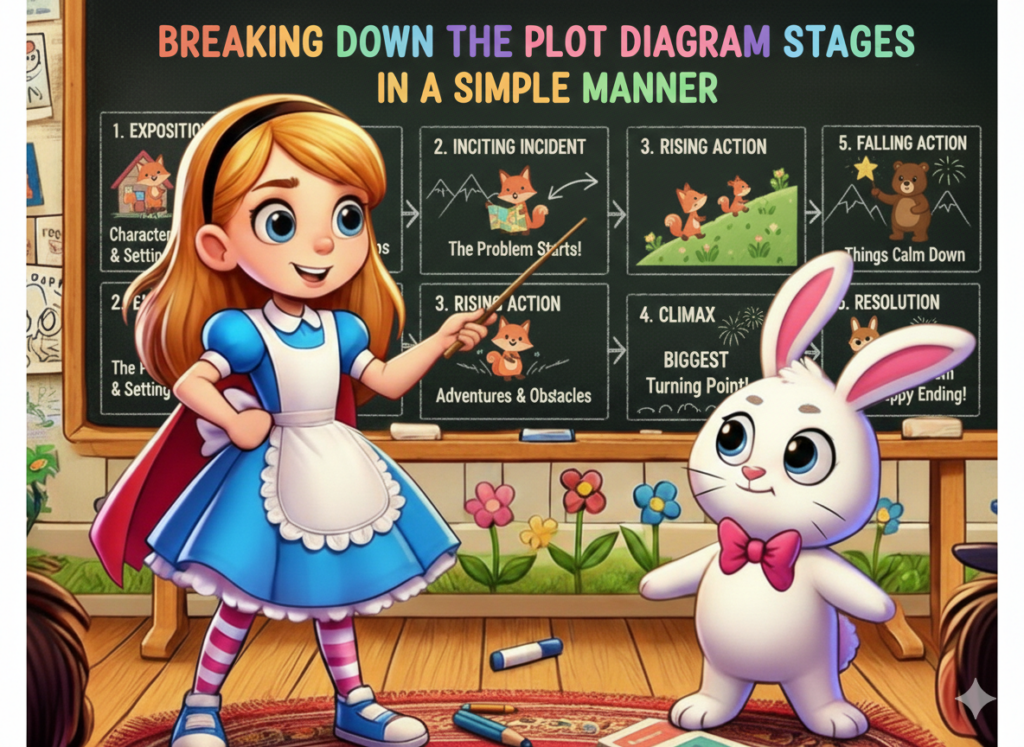
A standard plot diagram consists of six stages: Exposition, Inciting Incident, Rising Action, Climax, Falling Action, and Resolution. Visualize it as a story map where each stage moves the story ahead. Below is a step-by-step explanation of the stages in a kid-friendly manner. If you are drawing it on paper, you would title the stages from left to right.
Exposition
This is where your story begins. It introduces the main characters and setting, providing you with the necessary background information. You could start by drawing the main character and the setting (such as “Lily in her backyard”). This is where you are in the ordinary world before anything exciting happens. On the diagram, this is located at the bottom left of the mountain.
Inciting Incident
This is where the main action begins. In simpler terms, it is where something big happens. For example, “Lily hears a kitten meowing” could be the inciting incident; it tells Lily what she needs to solve (the kitten). This incident pushes the story from the ordinary world into the adventure world. On the diagram, it is usually located right after the exposition on the rising side of the mountain.
Rising Action
This is all the action that happens before the climax—the actions the characters take and the obstacles they encounter as they work to solve the problem. Kids can illustrate or write each event in the middle part of the diagram.
For instance, Lily asking her neighbors and searching the street for the kitten are rising action events. These events create suspense as the story develops, and you would place them on the rising part of the plot diagram.
Climax
The climax is the highest point of excitement, the turning point. It is where the central conflict reaches its greatest intensity. In our case, the climax could be Lily finding the kitten or returning it to its owner. On the plot mountain, the climax is at the very top, often the most remembered part of the story, because it answers the central question.
Falling Action
After the climax, things begin to wind down. This stage is where the threads that were unraveled in the climax are gathered and pushed toward the end. In Lily’s story, you could see her returning home with the kitten and telling her family all about the adventure she had. On the plot diagram, this stage would be on the decline, indicating that the story is winding down and the end is near.
Resolution
This is where the story concludes, and all the loose ends are tied up. It answers all the questions that were left unanswered. In most children’s stories, the resolution is a happy one, but it can also have a moral or a twist. On the plot diagram, the resolution is at the end, the final point. For instance, Lily could be seen waving goodbye, proud of herself for having helped the kitten.
Story Structure in Action: Books and Media as Practice
Use these ideas with stories kids already enjoy. Any of these media can be a plot diagram project, teaching kids how stories are structured by using a favorite book, short story, or video.
Picture Books
Picture books are great for creating a simple plot diagram because they tend to have a straightforward story and lots of descriptive language. Read a picture book with a child, stopping to discuss what’s happening. Each time something significant happens, write it on the chart, you can draw a quick picture or write a word or two.
For instance, if the story is about a lost toy, write on the chart when the toy goes missing and when it turns up. This is a great way to make reading an interactive adventure, increasing understanding and inspiring new stories. Turning every book into a mini story map plot chart helps kids realize that both printed stories and picture stories have the same basic structure.
Short Stories
Older children can create their own short story books or chapter books as well. After a child has finished reading a basic story, ask them to think about what happened first, next, and last. Write or draw each event under the headings of Beginning, Middle, and End on a chart. Voila! You now have a story map ready to go that illustrates characters and events. For example, one child can draw Lily looking lost in the beginning, while another can draw Lily happily returning the kitten in the end.
Make sure to tell the children that this story mapping technique can be used on any story. Every story follows the same basic pattern, beginning, middle, end. Watching how a short story relates to a story map will help children sequence longer stories, too.
Animated Shorts and Videos
Children learn a great deal from cartoons and educational videos, too, which also follow a story pattern. Use a short cartoon video to teach children about a plot diagram. Stop the video at strategic points (such as after the introduction, after the problem appears, and at the end). Ask the children to tell you what happened in each section and record it on the chart.
Essentially, you are tracing the plot of the cartoon video on your own chart. This will illustrate to children that cartoons and movies follow the same story pattern. It will also keep the children engaged and thinking. By drawing a picture of each event on the plot diagram, children are more involved in the story.
For example, after watching a popular cartoon video, stop the video at the point when the hero faces the problem and again at the end. Ask the children to record these events on their chart. This will demonstrate to the children that the story of a movie can be traced on a simple plot diagram just like a book.
Sample Story Map in Freeform Style
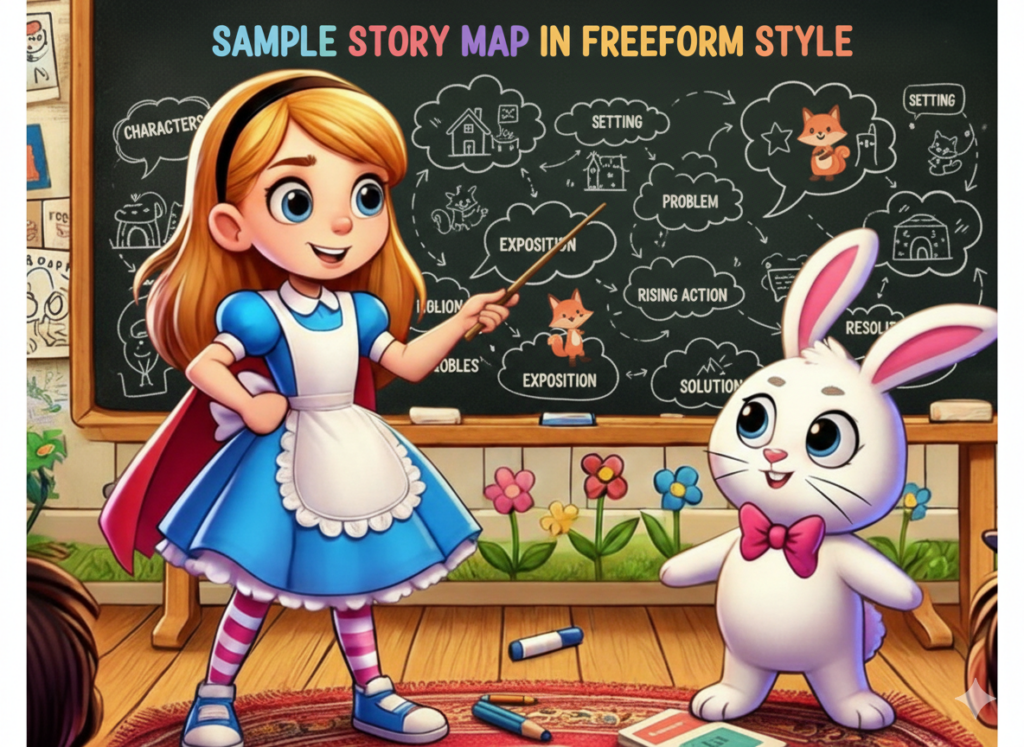
Now, let’s see how a simple story can be broken down into its plot points using a diagram, with Lily and the Lost Kitten as our example.
Exposition
Lily is in her backyard, playing with her toys. We meet Lily and see where we are.
Inciting Incident
A kitten meows, and Lily finds a lost kitten hiding under a bush. The main problem is introduced.
Rising Action
Lily finds a friend and searches the neighborhood for lost kittens by looking at lost and found postings.
Climax
At sunset, Lily finds a “Lost Kitten – Reward” sign and rushes to return the kitten.
Falling Action
The owner thanks Lily, and Lily goes home with her new friend.
Resolution
Lily feels happy and proud of herself for helping the kitten, and the story ends on a happy note.
These points would form a kind of journey on a plot diagram: from Lily playing to finding the kitten, searching for it, finding it back, and finally to Lily’s happy ending. By breaking down a story into steps, kids can see how simple stories can be easily mapped out.
1. Break Down Story Events. Discuss the story idea and break down the events that happen first, next, and finally. Ask each child to contribute to the story. Write each event on the chart in the proper section. For example, if the story is about a friendly duck, the kids might contribute: Duck finds a magic pond (Beginning), Duck meets a frog who needs help (Middle), Duck helps the frog get home (End). By seeing the events on the chart, the children understand the order of the story. You are literally plotting the story on the chart.
2. Fill It In Together. After the main events are on the chart, fill them in as a class. Draw simple pictures or write a word or two for each event. Ask the children to add details: “What does the character say in this part of the story?” This activity can be a whole-class activity: one child draws a picture, and another child speaks a sentence. By turning it into a story-creation activity, the children are more interested and invested in the plan. The plot chart is a great anchor activity as the children watch the story come alive on paper.
3. Write the Story. Finally, use the completed chart to write the story. Ask the children to write (or dictate) a sentence about each part of the plot chart. Begin with “Once upon a time…” and follow the chart. If they are too young to write a sentence, they can tell the story, and an adult or older child can write it down. This activity shows how a plot chart can directly lead to storytelling. The chart helps them remember all the important events they brainstormed.
Using Plot Charts and Anchor Charts in the Classroom
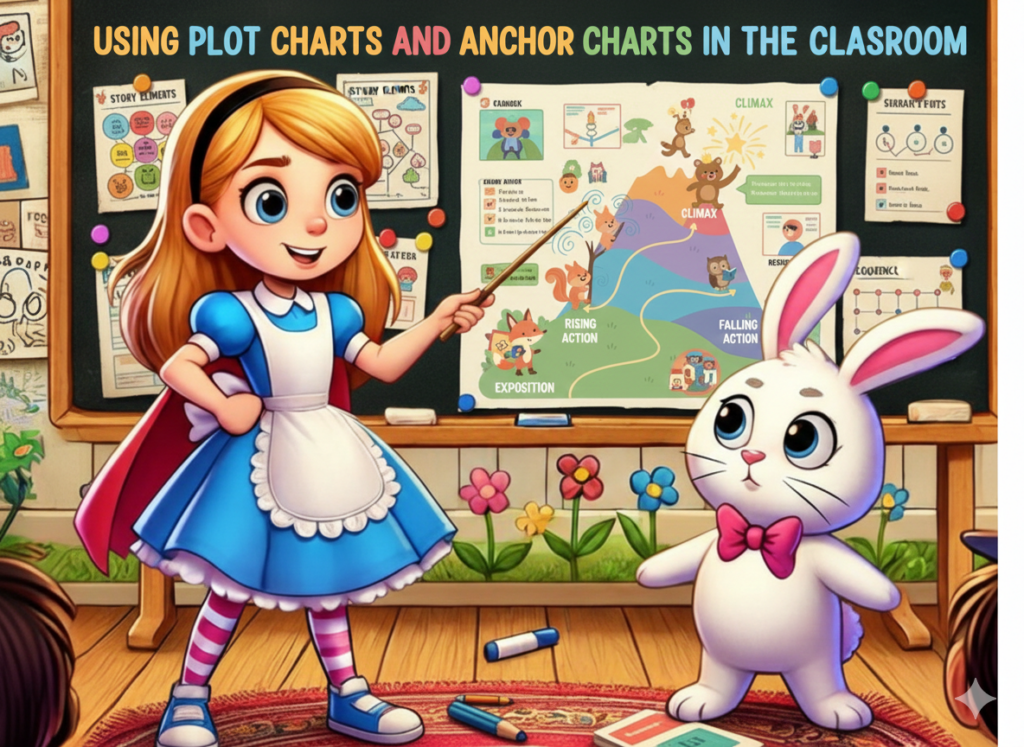
In the classroom, teachers often create colorful, large anchor charts to remind students of the structure of stories. An anchor chart is a large poster that makes processes, reminders, strategies, and guidelines visible to students. It is like a giant plot chart on the wall. You can set up a chart with columns or boxes titled Characters, Setting, Beginning, Middle, End. Each box is a mini plot chart:
Characters
Write or draw a list of who is in the story. Ask quick questions such as “Who is our hero? Who helps them?” Students can write the names or draw pictures of the characters (for example, Lily, a kitten, a friend). A Characters column helps students remember who is involved in the story.
Setting
Write or draw where and when the story happens. Write quick phrases such as “backyard at dusk” or draw a picture. A Setting column encourages kids to write about time and place in their stories.
Beginning
Under Beginning, identify what happens first (exposition and inciting incident). For example: “Lily is playing” and “Lily finds a kitten.” Use bullet points or short phrases. This helps to anchor the beginning of the story and identify where the plot begins.
Middle
The Middle describes the most important events (rising action and climax). For example, you could list: “searches for owner” and “finds a lost sign.” These important events move the story toward its climax. Viewing these events under “Middle” helps children visualize the action building.
End
The End section ties everything up (falling action and resolution). For example: “Kitten returned” and “everyone smiles.” Anchoring the conclusion points helps students remember to conclude their story with a satisfying ending. Having an ending on the anchor chart helps children ensure that all the loose ends are tied up.
Having this plot chart available in the classroom allows children to refer to it as they write or read. Gradually, they will commit the structure of a story to memory and feel more confident in their writing. The anchor chart is their “go-to” reference plot chart.
Common Errors and Creative Ways to Teach
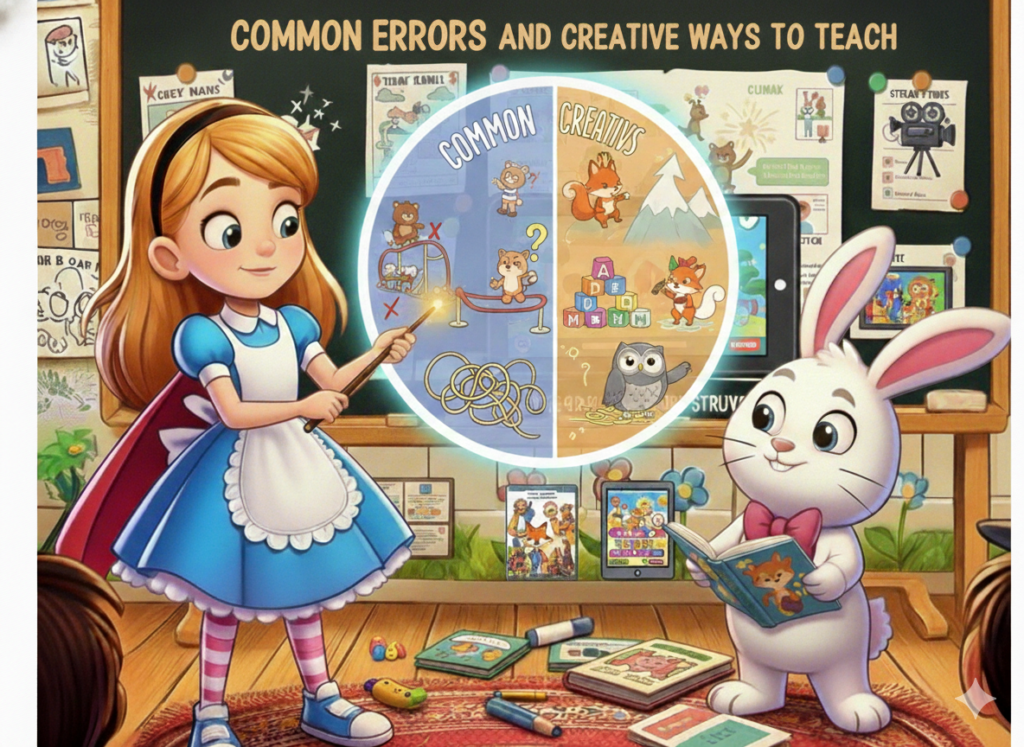
I will share a few ways on how to teach your children creatively.
Naming It
Refer to it as a plot diagram every time. Using the same name helps children feel comfortable with the concept.
Skipping Planning
Do not begin writing without planning. Begin with a brief discussion and a chart to help young writers understand the story before they write.
Using Big Words Too Soon
The words climax and resolution are hard concepts for preschoolers. Use easier names such as Start, Middle, End (or Beginning/Problem/Solution) until they are ready for the big words.
Too Much Information
Preschoolers may want to record every little detail. Encourage them to record only the important events so the plot diagram remains simple and easy to understand.
Make It Fun
Make storytelling a game. Act out scenes with puppets, draw quick comic-style pictures, or use play figures to retell the story on a pretend stage. This makes learning fun and entertaining.
Art and Language
Allow children to draw pictures to represent each section of the plot diagram. Integrating art and language skills allows children to use their creativity and think in pictures and words.
Connect to Their World
Use experiences for story ideas (a trip to the zoo, a birthday party, etc.). Asking “What if?” questions about real events helps generate story ideas, which can then be placed on the plot diagram.
Showcase Creativity
Allow children to share their stories or charts with the class. Showcasing their work and the completed plot diagrams helps reinforce the idea that planning with this chart helped them create something special.
Final Thoughts
A plot diagram is a storytelling buddy in disguise, helping young students understand story structure. By making sense of story structure in a visual and engaging way, creative writing for kindergarten becomes accessible and fun. We hope this note inspires you to try out these storytelling and fun writing activity ideas with your kindergarten students or child.
Found this guide useful then visit our prodigy creekside website regularly for more creative writing projects, kindergarten story ideas, and preschool learning fun sent your way. Happy storytelling! And don’t forget to share these plot diagram tips and ideas with fellow educators and parents. Together, we can empower every child to be a confident storyteller.
Frequently Asked Questions
What is a plot diagram for kids?
A plot diagram for kids is a simple visual story plot chart that shows the beginning, middle, and end of a story. It helps children understand story structure by mapping out the main events in order. By using a plot diagram, kids can organize their ideas and improve narrative writing skills in a clear and engaging way.
How to explain a plot to kids?
To explain a plot to kids, start with beginning, middle, and end before introducing bigger terms. Show them how a problem starts, builds up, and gets solved using a simple story plot chart. When children visually plot a diagram, they understand story structure more easily and feel confident creating their own story ideas.
What are the 4 types of plots?
The four common types of plots in story structure are: overcoming the monster, rags to riches, the quest, and rebirth. These patterns help children recognize how narrative writing often follows familiar structures. Teaching these types alongside a plot diagram for kids makes it easier to identify story flow in books and videos.
Plot diagram story?
A plot diagram story is a story that follows the clear stages of exposition, rising action, climax, falling action, and resolution. When kids use a plot diagram, their story ideas become organized instead of random. This structured approach strengthens narrative writing and helps children create complete, satisfying endings.
Plot diagram example story
A simple plot diagram example story could be about a child finding a lost puppy. The beginning introduces the child, the middle shows the search and challenges, and the end resolves the problem. Mapping this on a story plot chart helps children see how each event connects in proper story structure.
Greetings! Very helpful advice in this particular post! It’s the little changes that will make the largest
changes. Thanks for sharing!
Hi to every one, the contents existing at this site are in fact remarkable for
people experience, well, keep up the nice work fellows.
Thanks for sharing your thoughts about 신용카드현금화.
Regards