

Shape activities for preschoolers are one of those things that look simple on the surface but quietly shape how children understand the world. When a child starts noticing geometry shapes, daily life begins to make more sense. A plate becomes a circle. A book looks like a rectangle. A window suddenly has straight lines and corners. This is how learning for preschoolers starts to grow naturally.
Many parents search for structured ideas and formal lessons. Some programs do offer helpful guidance. Still childhood playing remains the strongest foundation for early learning. Play to learn preschool methods allow children to explore without pressure.
There is no need for fancy materials. Geometry shapes already exist in homes, kitchens, parks and streets. Shape ideas for preschool appear during snack time, bath time and even while walking outside.
The Importance of Shape Activities for Preschoolers in Early Development
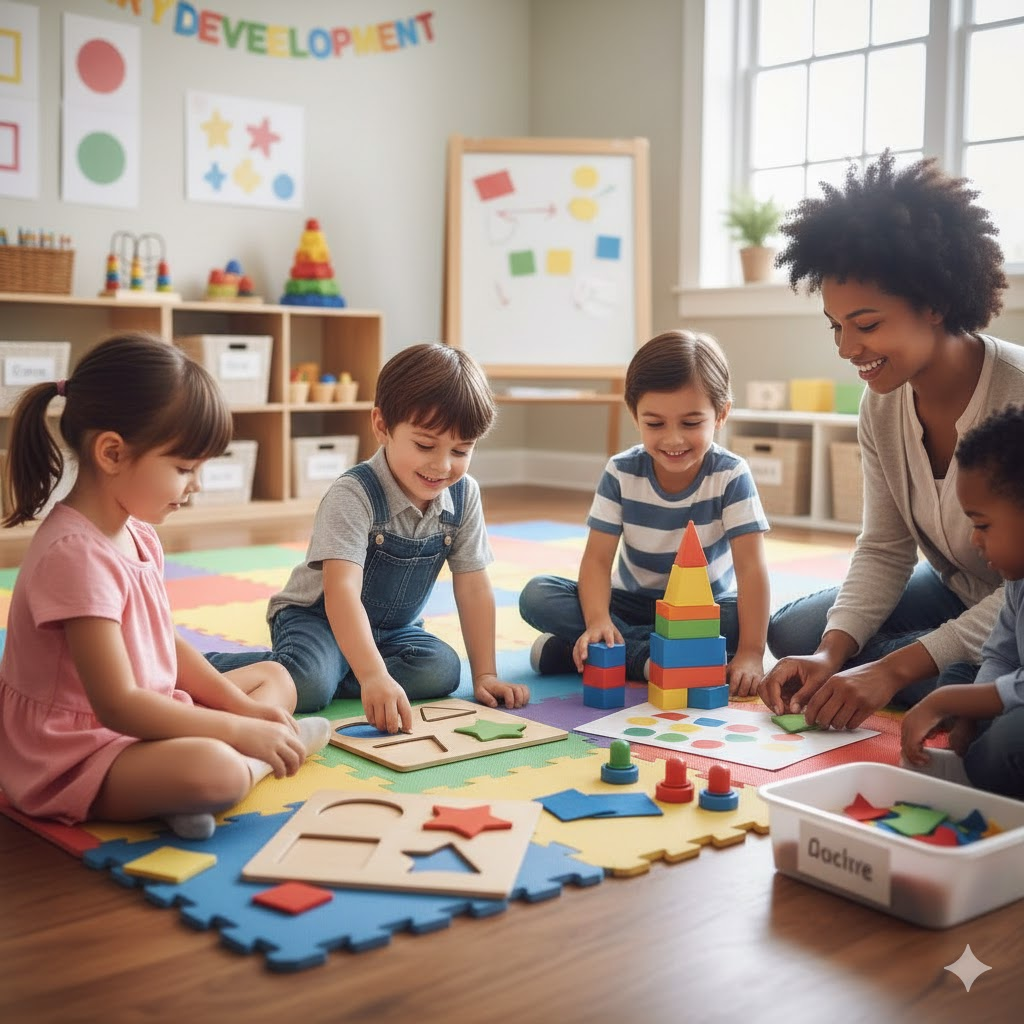
Shape activities for preschoolers support early brain development in ways that are often overlooked. Shapes help children organize what they see. Because of this the world feels less confusing and more predictable. Learning for preschoolers improves when information feels organized and familiar. Childhood playing gives children the space to build these skills slowly.
How Childhood Playing Builds a Strong Foundation for Math
Childhood playing supports early math skills long before numbers appear. Shape activities for preschoolers help children compare, group and sort objects. These actions seem small, but they are the base of logical thinking.
During learning shapes activities children often:
- sort toys by geometry shapes
- notice which shapes are similar
- compare sizes without using numbers
Because play to learn preschool methods feel relaxed, children stay focused longer. Learning for preschoolers happens without frustration. Over time these small moments build strong problem solving skills.
Why Geometry Shapes Are the First Step in Visual Literacy
Geometry shapes are often the first symbols children understand. A circle or square is easier to remember than a letter. Because of this shape activities for preschoolers support early reading skills later on.
Learning for preschoolers becomes smoother when visual recognition is strong. Childhood playing that includes shapes helps children notice patterns, outlines and spaces. These skills later support writing, drawing and reading without feeling forced.
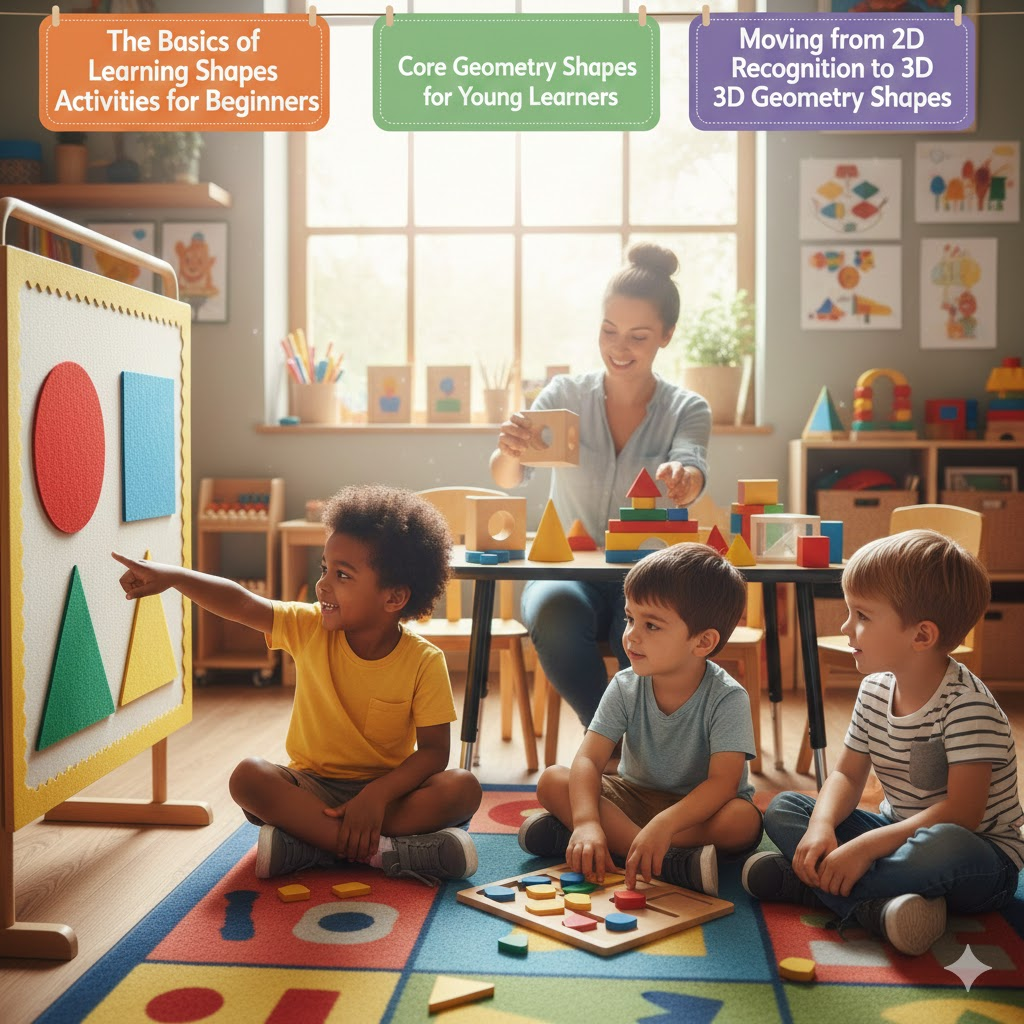
The Basics of Learning Shapes Activities for Beginners
Learning shapes activities work best when they start slowly. Young children process information in small pieces. Too many shapes at once can feel overwhelming. Shape activities for preschoolers should feel safe, familiar and repetitive. Finally this is where childhood playing helps most.
Defining the Core Geometry Shapes for Young Learners
Most learning shapes activities begin with a small group of geometry shapes. These shapes appear often in daily life, which makes learning for preschoolers easier.
Generally common starting shapes include:
- circle
- square
- triangle
Spending several days with one shape helps children remember it better. Shape activities for preschoolers that repeat naturally through play are more effective than quick lessons. Childhood playing allows learning to happen at a comfortable pace.
Moving from 2D Recognition to 3D Geometry Shapes
After flat shapes become familiar, children naturally notice solid objects. This is where 3D geometry shapes come into play. Balls, boxes and containers offer hands-on learning shapes activities.
Through these shape activities for preschoolers children begin to understand space. Learning for preschoolers becomes more connected to real life. Childhood playing with blocks and toys turns into early building and problem solving without effort.
Physical Activities for Preschoolers That Teach Shapes
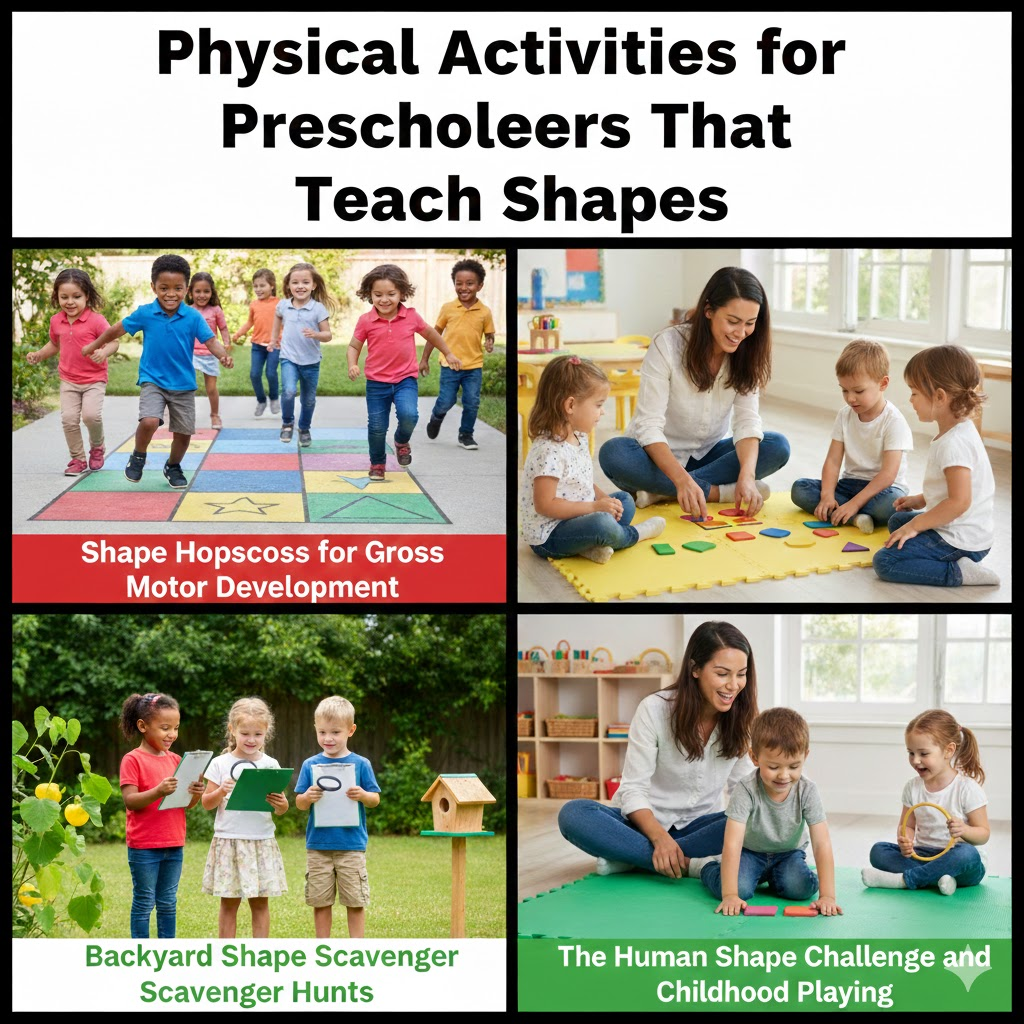
Physical activities for preschoolers play an important role in learning. Movement supports memory and focus. When children move their bodies, learning for preschoolers often becomes easier. Shape activities for preschoolers that include motion work especially well for active children.
Shape Hopscotch for Gross Motor Development
It is a simple activity for preschool that combines movement with learning. Geometry shapes drawn on the ground invite children to jump, balance and move.
This activity helps because:
- movement supports memory
- shapes are learned through action
- learning feels playful, not forced
Physical activities for preschoolers like this support whole-body learning. Shape activities for preschoolers stay memorable when movement is involved.
The Human Shape Challenge and Childhood Playing
Using bodies to form geometry shapes often leads to laughter. That is part of the learning. Meanwhile children work together to make circles, triangles or lines.
Overall this type of childhood playing:
- encourages cooperation
- supports social skills
- keeps learning light
Shape activities for preschoolers become shared experiences instead of quiet tasks. Learning for preschoolers feels social and fun.
Backyard Shape Scavenger Hunts
A backyard or outdoor area can easily become a physical activity for preschoolers. Objects shaped like circles or squares can be hidden around the area.
When children find a shape, they often shout its name. This makes learning for preschoolers feel exciting. Shape activities for preschoolers in nature help children see that math exists everywhere.
Sensory Shape Ideas for Preschool Exploration
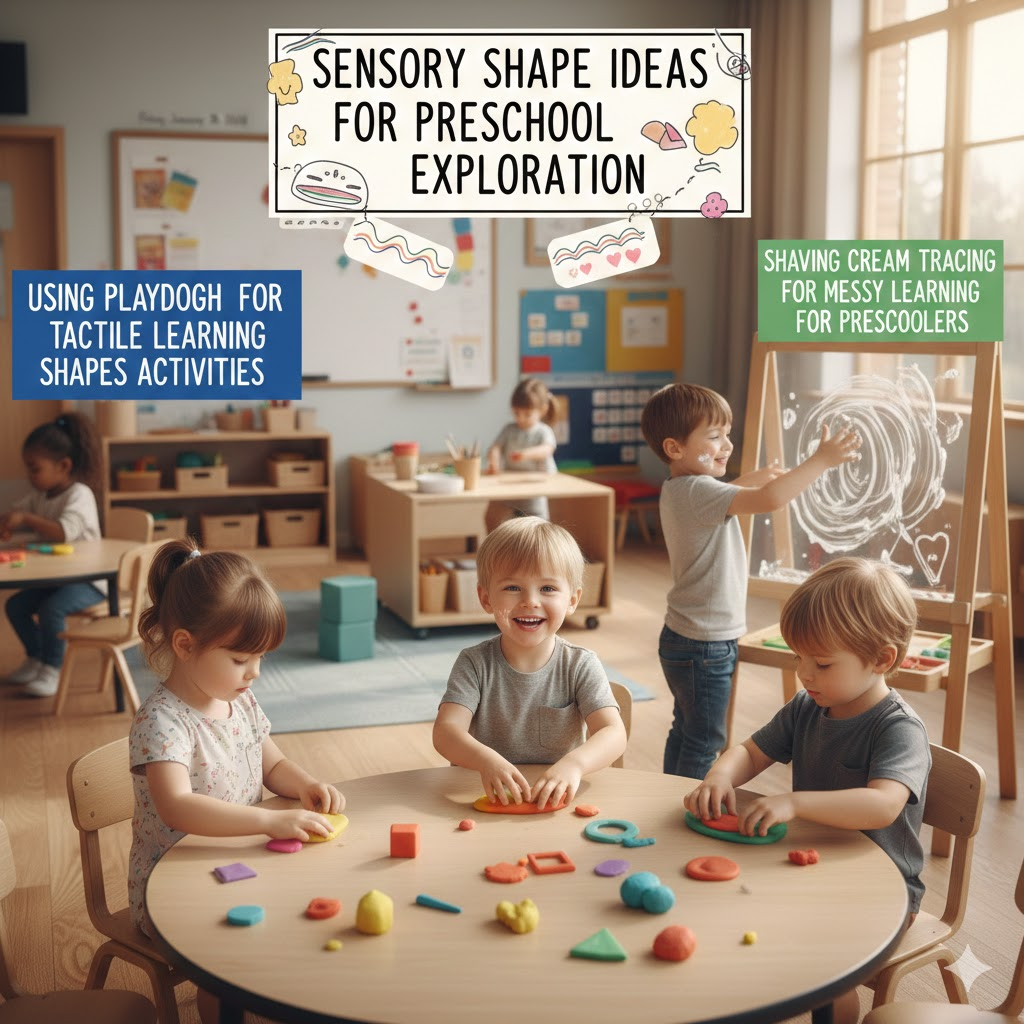
Sensory play adds depth to learning. Touch, texture, and movement help ideas stay longer in memory. Shape activities for preschoolers that involve sensory input often work well for children who struggle with sitting still.
Using Playdough for Tactile Learning Shapes Activities
Playdough allows children to press, roll, and mold geometry shapes. Learning shapes activities become hands-on and flexible.
This activity supports learning because:
- fingers explore edges and corners
- mistakes can be fixed easily
- creativity stays open
Learning for preschoolers feels calm during sensory play. Childhood playing through touch supports focus and patience.
Shaving Cream Tracing for Messy Learning for Preschoolers
Shaving cream tracing is a popular sensory activity for preschool. Children draw geometry shapes using their fingers on a flat surface.
This kind of learning for preschoolers is memorable because of the texture. Shape activities for preschoolers like this also support creativity and fine motor skills. Cleanup is simple which helps adults feel relaxed too.
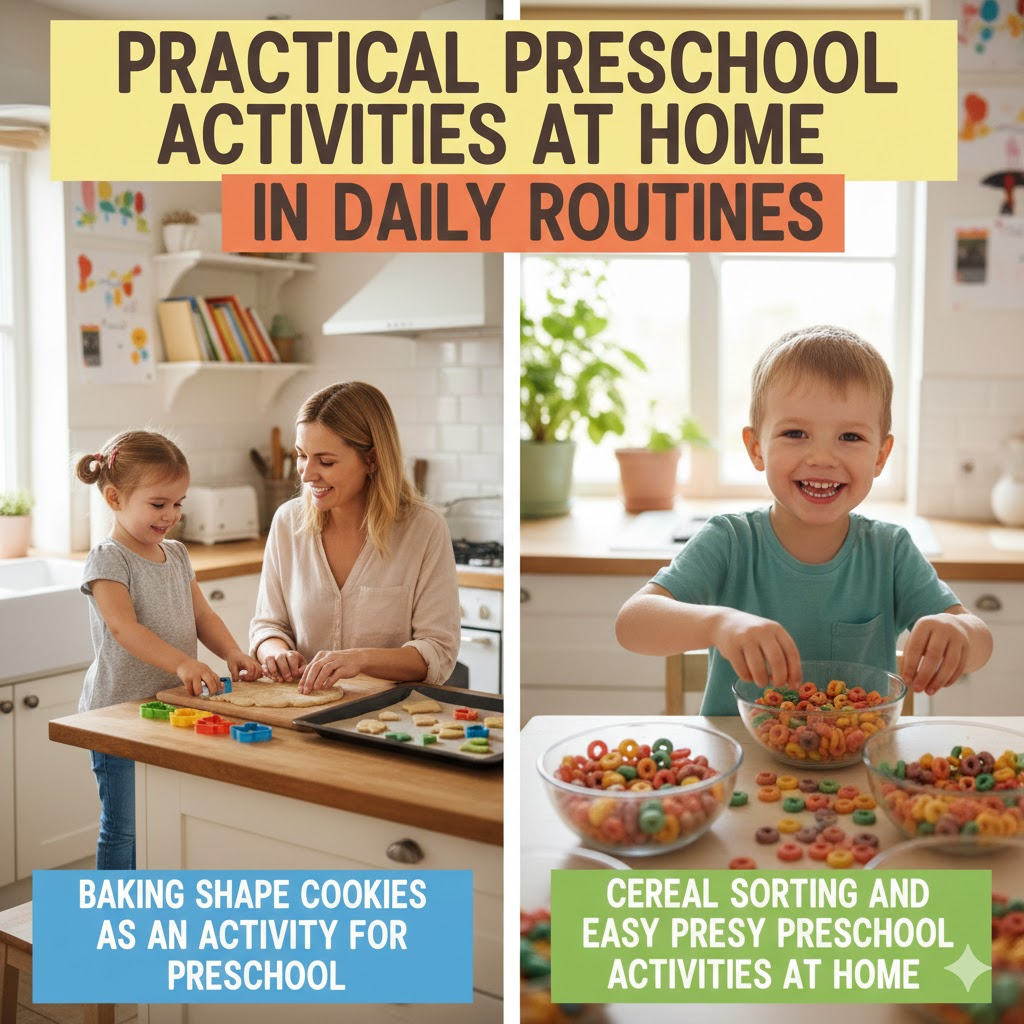
Practical Preschool Activities at Home in Daily Routines
Preschool activities at home do not need special planning. Everyday routines already contain shape activities for preschoolers.Learning for preschoolers fits easily into moments that already exist because it blends naturally into everyday routines.
Baking Shape Cookies as an Activity for Preschool
Baking shaped cookies turns the kitchen into a learning space. Geometry shapes appear while cutting dough and arranging trays.
As a result this activity for preschool supports:
- shape recognition
- patience
- real-world learning
Play to learn preschool moments like this feel natural. Learning for preschoolers becomes part of family routines.
Cereal Sorting and Easy Preschool Activities at Home
Sorting cereal by geometry shapes is a quiet and simple activity for preschool. This learning shapes activity works well during breakfast or snack time.
Preschool activities at home like this require very little setup. Shape activities for preschoolers happen while daily life continues.
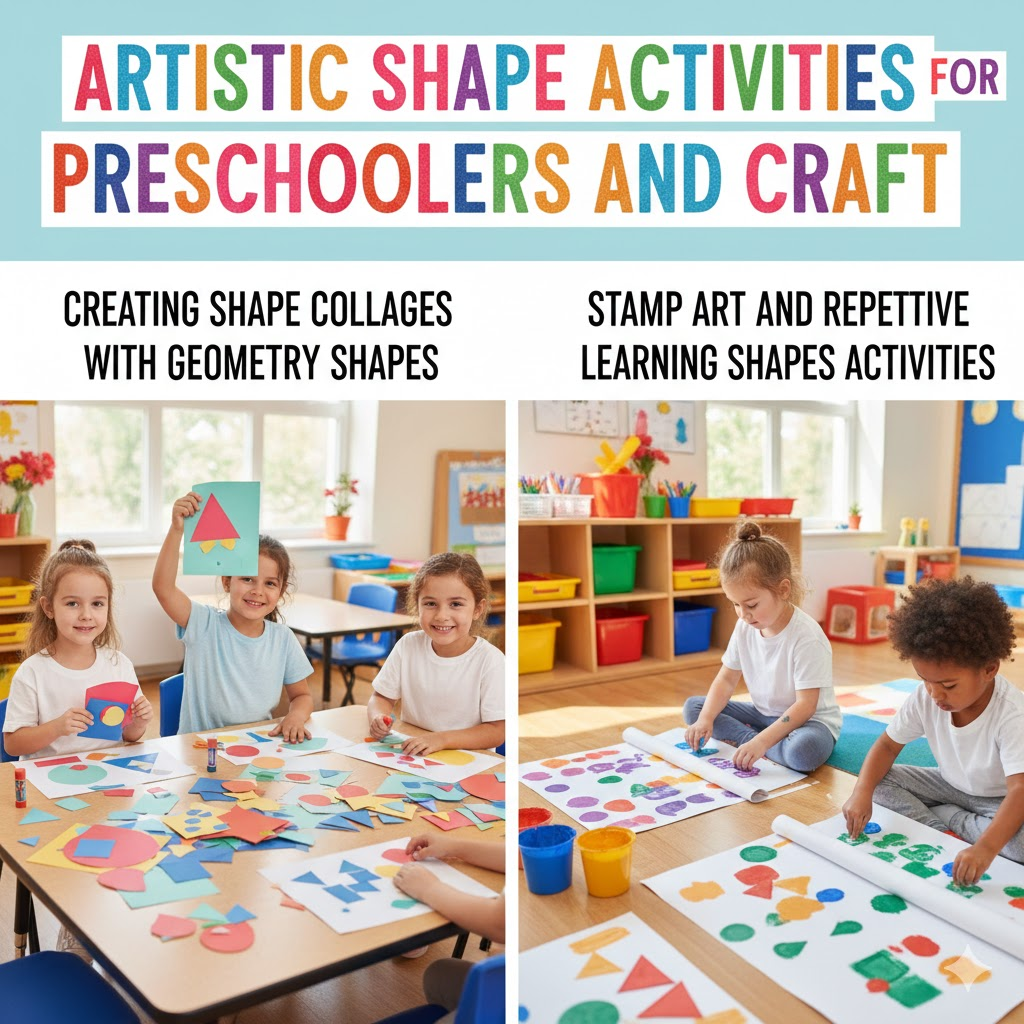
Artistic Shape Activities for Preschoolers and Crafts
Art allows shape activities for preschoolers to feel expressive.Similarly creativity supports learning in a gentle way.Childhood playing through art helps children explore ideas without rules.
Creating Shape Collages with Geometry Shapes
Shape collages allow children to combine geometry shapes into pictures.Likewise, houses, animals and vehicles often appear naturally.
This activity for preschool supports:
- visual planning
- creativity
- fine motor skills
Learning for preschoolers feels rewarding when art is involved.
Stamp Art and Repetitive Learning Shapes Activities
Stamping geometry shapes with paint reinforces recognition through repetition. Consequently learning shapes activities through art support focus and calm.
Shape activities for preschoolers through stamping also build confidence. Repetition feels soothing rather than boring.
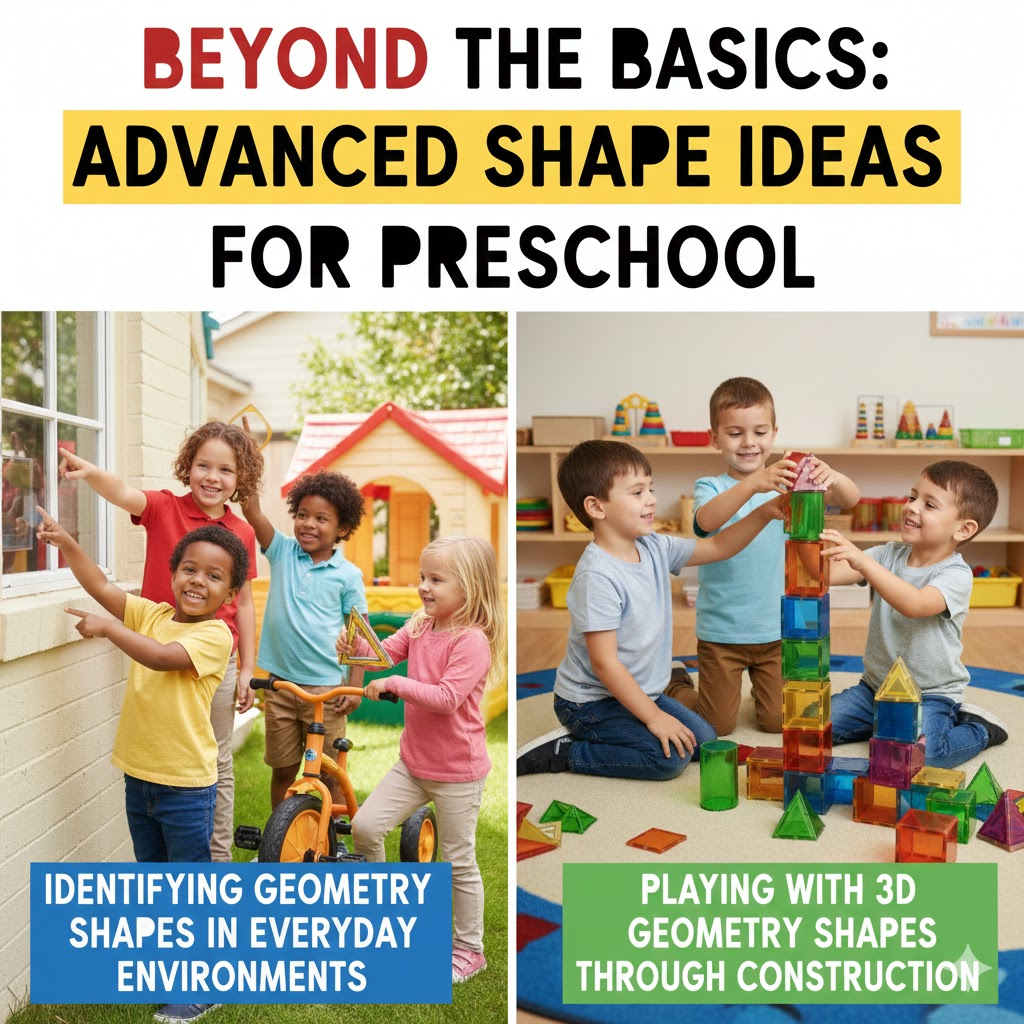
Beyond the Basics: Advanced Shape Ideas for Preschool
As children grow more confident, shape activities for preschoolers can expand into real-world exploration. Learning for preschoolers continues outside the home and classroom.
Identifying Geometry Shapes in Everyday Environments
Windows, signs, wheels and buildings all offer shape ideas for preschool. Meanwhile walks become learning shapes activities without planning.
Childhood playing turns ordinary outings into quiet lessons. Learning for preschoolers happens naturally when shapes are noticed out loud.
Playing with 3D Geometry Shapes Through Construction
Stacking cubes, rolling spheres, and building towers introduce early physics. Shape activities for preschoolers involving 3D objects deepen spatial understanding.
Learning for preschoolers becomes active and curious through building and experimenting.
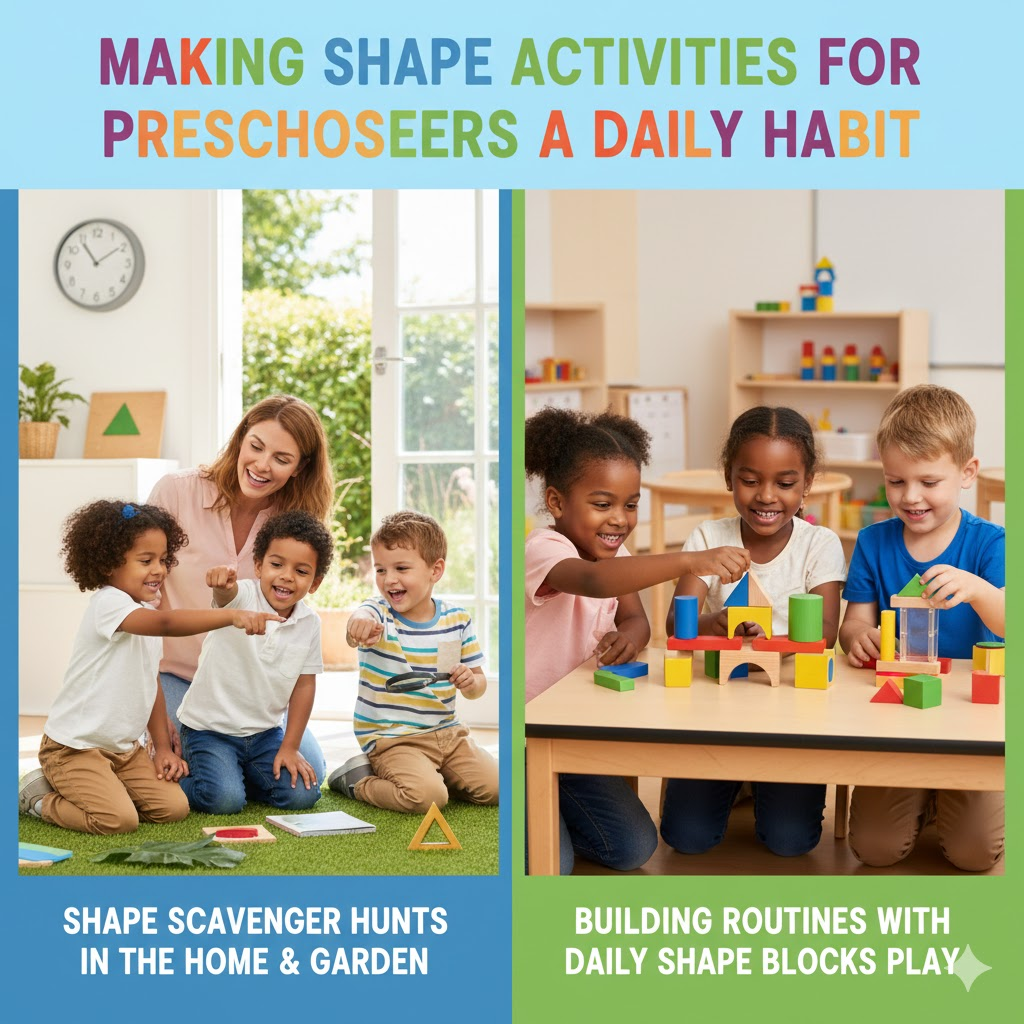
Making Shape Activities for Preschoolers a Daily Habit
Shape activities for preschoolers do not need long sessions. Short frequent moments matter more. Even a few minutes of play to learn preschool each day supports learning for preschoolers over time.
Childhood playing is the foundation of early education. When shaping activities for preschoolers, natural children gain confidence without effort. Geometry shapes become familiar friends instead of lessons.
FAQ: Shape Activities for Preschoolers
What are the best physical activities for preschoolers to learn shapes?
Physical activities for preschoolers such as hopscotch, scavenger hunts and movement games help children remember shapes through action.
How should learning shapes activities begin?
Learning shapes activities should begin with simple geometry shapes and everyday objects found at home.
Are geometry shapes too hard for preschoolers?
Geometry shapes are ideal for early learning and support visual development naturally.Can preschool activities at home replace classroom learning?
Preschool activities at home work very well for early concepts like shapes especially when learning is one-on-one.