

How to make paper is a question that many parents and teachers ask when looking for meaningful summer activities for children at home. Learning how to make paper is not only about the final product because the entire process becomes a recycling adventure that introduces ideas about nature and reuse. When exploring how to make paper, old scraps are turned into a soft mixture called pulp and then dried into new sheets.
Over time learning how to make paper shows that trash is often just a resource in the wrong place. How to make paper feels almost like a small magic trick that families can enjoy together.
Why Papermaking is the Ultimate Craft
Papermaking is often described as one of the most engaging art activities for preschoolers because it involves touch, water and movement. Many art activities for preschoolers work best when they are hands-on and sensory based. As a result, how to make paper stands out because children can see and feel a real change happening.
Using how to make paper as a main project allows children to observe physical changes in materials which supports early thinking skills. In addition, repeating art activities for preschoolers helps children become more confident with each step. Unlike many art activities for preschoolers that rely only on paint this activity focuses on water and texture. Art activities for preschoolers are often more successful when done outdoors on a warm sunny day.
Engaging Art Activities for Preschoolers and Beyond
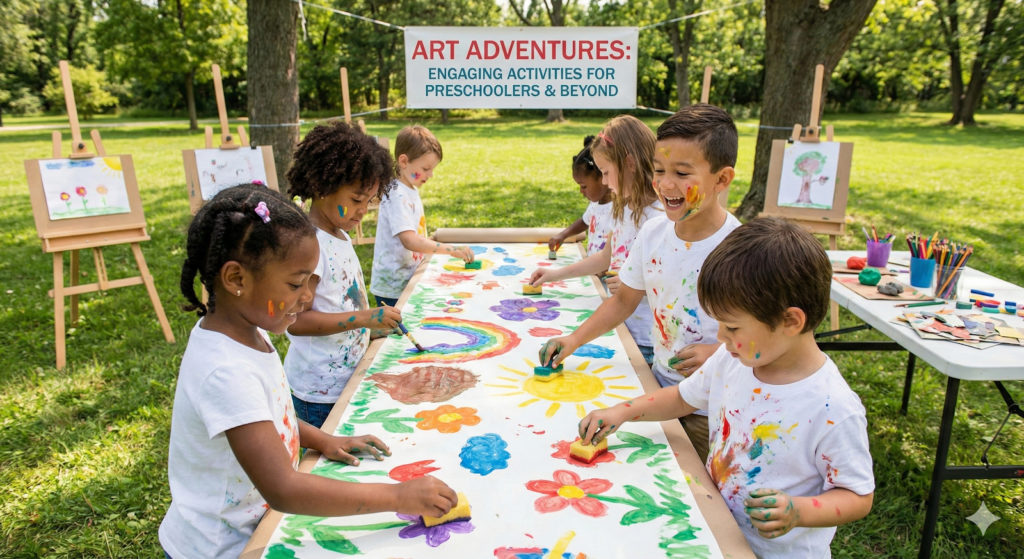
Art activities for preschoolers help develop fine motor skills through simple actions like tearing paper into small pieces. Tearing is an overlooked part of art activities for preschoolers yet it strengthens hand muscles in a natural way.
When art activities for preschoolers involve water and recycled materials the pressure to create something perfect is reduced.Therefore art activities for preschoolers should focus more on the process than the final result.
What Is the Best Material to Make Paper?
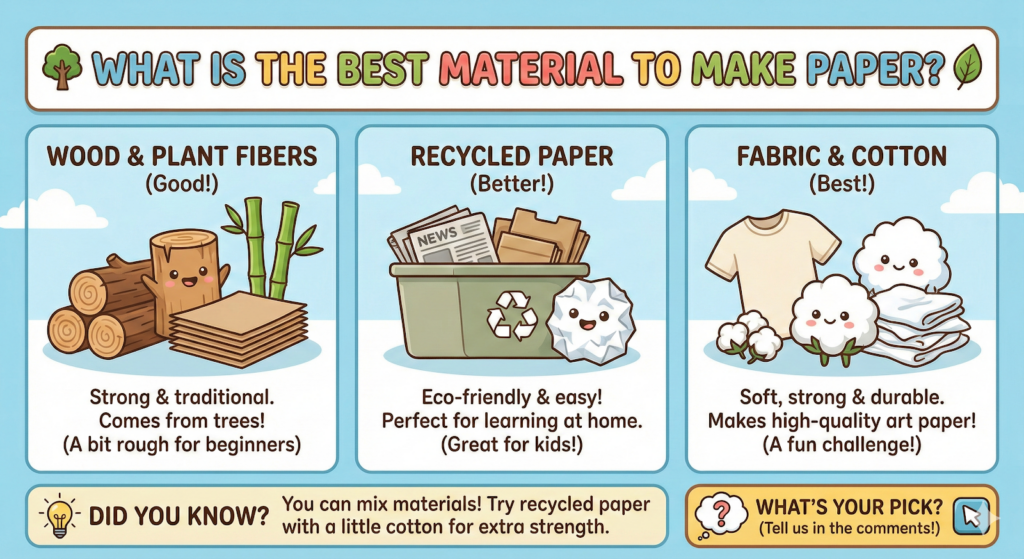
Before learning how to make paper it helps to understand that different papers create different results. For example, how to make paper using newspapers often leads to grey or blue toned sheets because of ink.
However, when learning how to make paper with brighter results old office paper or envelopes work better. Choosing the right material is an important part of how to make paper successfully. If the goal is to learn how to make paper with color construction, paper scraps are a good option. Overall mastering how to make paper comes from experimenting with different fibers found in recycling piles.
An Easy Paper Craft for Sustainable Living
An easy paper craft that supports sustainability offers double benefits. This easy paper craft turns waste into something useful making it a clear example of upcycling. Many households look for an easy paper craft that does not require special kits or expensive tools. Because this is an easy paper craft it works well for rainy afternoons or quiet weekends. Teaching children that an easy paper craft can help save trees builds early awareness about the environment. An easy paper craft that results in cards or notes also feels practical and rewarding.
Essential Supplies DIY Activities Equipment
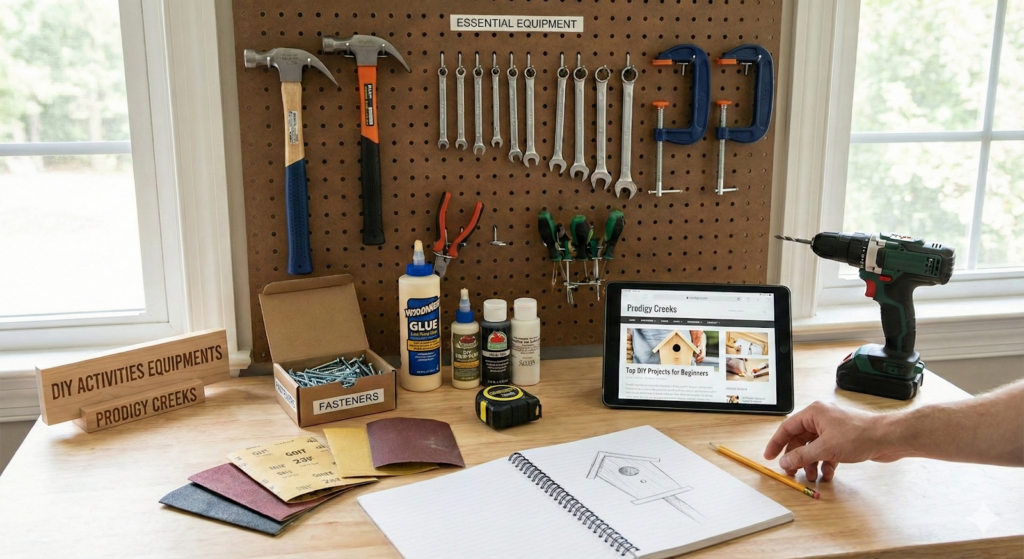
Most diy activities require only a few basic tools. For how to make paper, a blender is helpful for creating smooth pulp. In addition many diy activities become easier with a wooden frame and fine mesh screen, although a window screen or sifter can also work.
Large tubs are useful for diy activities that involve water helping contain mess. Felt sheets or clothes are important during diy activities to absorb excess water. Overall diy activities that use recycled materials encourage creative problem solving.
Choosing Your Base How to Make Paper with Recycled Scraps
When deciding how to make paper, different recycled scraps create different textures. Egg cartons create thicker sheets while construction paper adds bright color. Although some ask how to make paper with glossy magazine pages, these papers break down poorly in water.
Therefore, how to make paper works best with matte papers that absorb water easily.
Next-Level Ingredients Make Homemade Paper with Fancy Bits
To make homemade paper more decorative, natural elements can be added. For example, dried flowers or herbs add texture and scent when making homemade paper. Small threads or bits of color also enhance homemade paper visually. When making homemade paper, creativity plays a large role. Homemade paper with seeds inside can later be planted adding another learning layer. Gifts made from homemade paper often feel more meaningful because of the effort involved.
The Master Class How to Make Paper in 6 Easy Steps
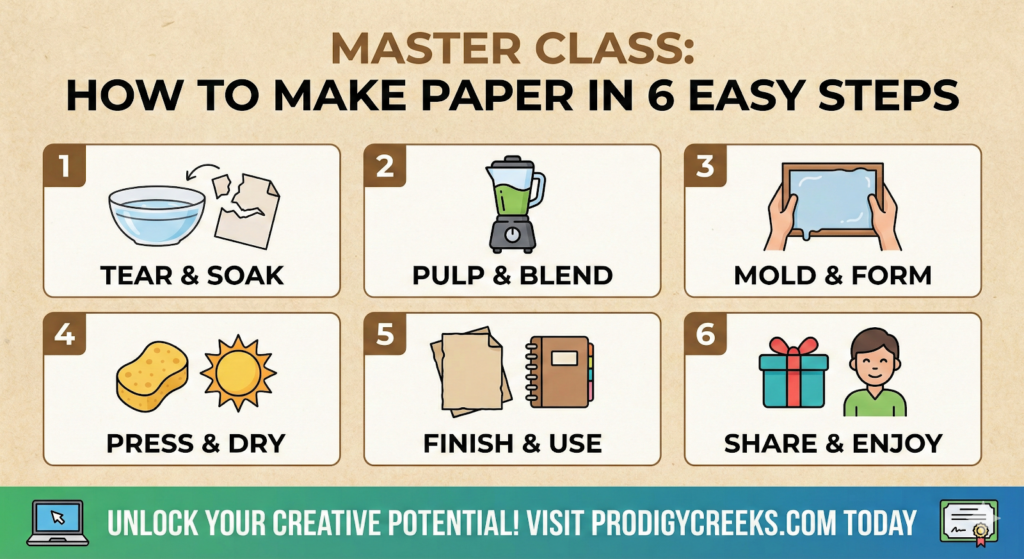
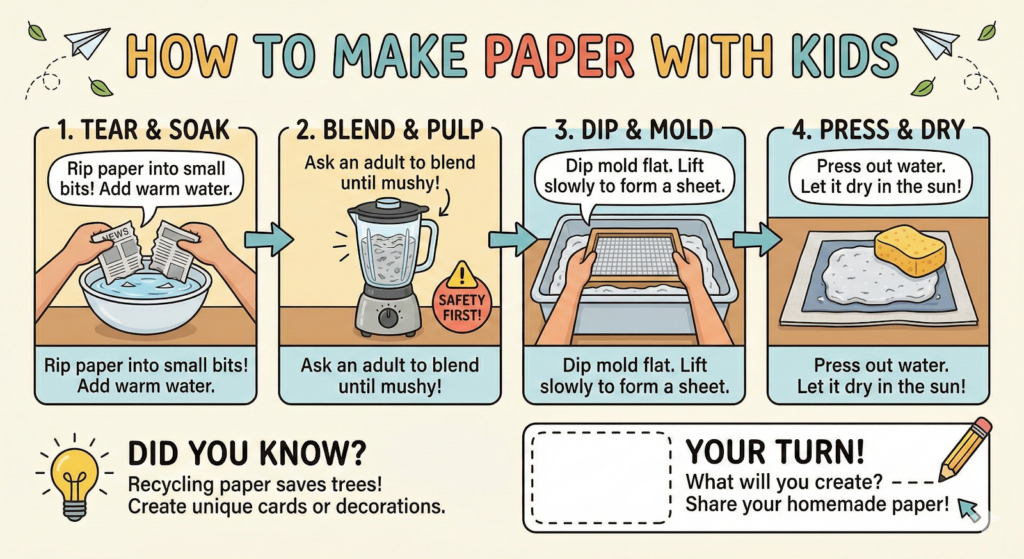
The process of how to make paper follows a clear sequence. Although personal variations exist, these steps provide a reliable starting point.
Making paper takes patience especially during drying. Rushing the process often affects results. The following steps explain how to make paper from start to finish.
Step 1 Prep and Soak Creative Activities for Kindergarteners
Creative activities for kindergarteners often begin with tearing paper into small pieces. This step allows children to engage freely with the materials.
• Tear old paper into pieces no larger than a postage stamp
• Place the torn paper into a bowl or tub
• Cover completely with warm water
• Leave the paper to soak until it becomes soft and pulpy
Creative activities for kindergarteners are best done in spaces that are easy to clean.
Step 2 Create the Pulp How to Make Paper Using a Blender
This step shows how to make paper pulp by blending soaked paper with water.
• Transfer soaked paper into a blender
• Add extra water to allow smooth blending
• Blend until the mixture looks like thick soup
• Check for leftover chunks and blend again if needed
This step is central to how to make paper because pulp quality affects the final sheet.
Step 3 The Dip and Sift Paper Activities for the Whole Family
Paper activities often involve dipping the screen into pulp and lifting it carefully.
• Submerge the screen into the pulp mixture
• Lift slowly while keeping the screen level
• Shake gently side to side to spread fibers evenly
• Allow excess water to drain back into the tub
These paper activities allow children to watch liquid slowly form a solid sheet.
Step 4 The Couching Family Activities Made Simple
Family activities during papermaking include transferring the wet sheet onto felt.
• Place a felt sheet on a flat surface
• Flip the screen carefully onto the felt
• Press gently to release the paper sheet
• Lift the screen slowly away
These family activities often create lasting memories.
Step 5 Pressing and Drying Finalizing Your Easy Paper Craft
Returning to the easy paper craft stage, excess water must be removed.
• Press the back of the screen with a sponge
• Blot gently until most water is absorbed
• Leave sheets to dry in a warm airy place
• Check dryness before peeling from felt
Once dry the easy paper craft can be peeled from the felt.
Troubleshooting Common Questions on How to Make Paper
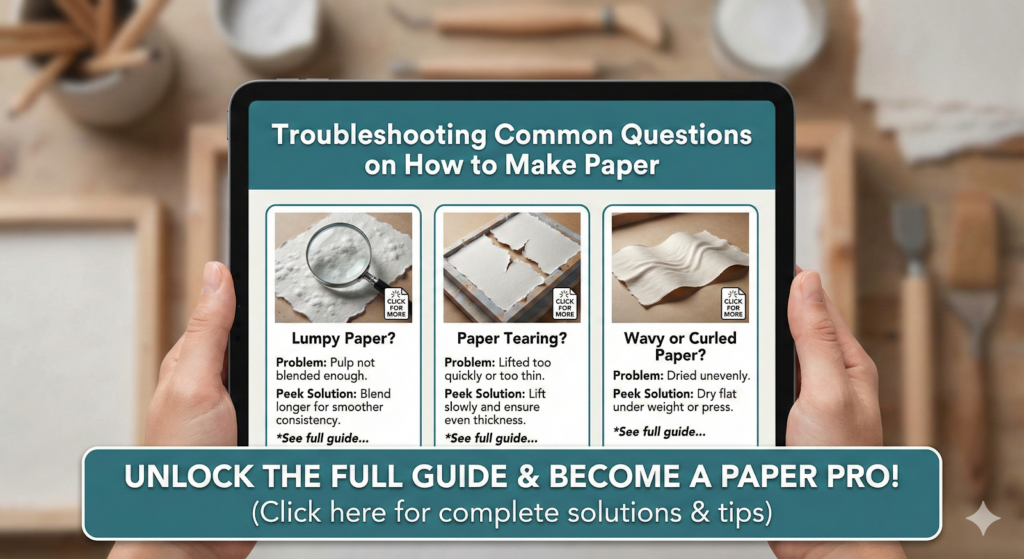
Learning how to make paper sometimes leads to challenges. Sheets may turn out too thick if pulp concentration is high. In that case adding more water helps. Another issue during how to make paper is fragile sheets caused by insufficient pressing.
Practicing how to make paper helps achieve the right balance. Overall how to make paper is more art than science.
Beyond the Page What Can Be Done With Homemade Creations
Once homemade paper is ready many crafts for kids become possible. Crafts for kids often look more interesting when using textured handmade paper. When making homemade paper options for crafts for kids expand greatly. Crafts for kids using natural materials pair well with handmade sheets.
Crafts for Kids Using New Paper
Crafts for kids include handmade cards, drawings and letters. These crafts for kids feel special because the paper itself carries a story.
Using homemade paper in crafts for kids adds depth and meaning. Many crafts for kids benefit from knowing materials were recycled.
Integrating Other At-Home Activities
At-home activities can be combined with papermaking projects. At-home activities such as painting or leaf rubbings work well on textured paper.
These at-home activities help fill long summer days. At-home activities that reuse materials support creativity and bonding.
FAQ People Also Ask
Q: How is paper made for kids step by step?
A: Paper making for kids usually follows simple steps such as tearing old paper soaking it in water, blending it into pulp, dipping a screen, pressing out water and allowing the sheet to dry.
Q: How can paper be created at home without special tools?
A: Paper can be made at home using basic items like an old picture frame mesh or window screen, a tub and recycled paper scraps. No professional kit is required.
Q: What are the five stages of paper making used in factories?
A: The five stages include pulping, cleaning, thinning, forming and drying. These stages are similar to the simplified process used at home.
Q: Is paper making safe for kindergarteners?
A: Paper making is safe for kindergarteners when adults supervise closely and handle electrical tools such as blenders.
Conclusion Start Your DIY Paper Journey Today
Learning how to make paper offers a creative way to connect learning and sustainability. This paper project encourages experimentation and patience.
Over time how to make paper becomes easier and more flexible. Homemade paper opens doors to many diy activities and crafts for kids throughout the year.