

Good manners often begin in the smallest moments. They do not start with big lectures or strict rules. They grow during daily life. This happens when a child watches and listens. They slowly learn how to behave around others. Good manners are not about perfection. Instead, they help preschoolers feel safe and confident. They feel connected in their growing world. When families focus on good manners early, children naturally develop good behaviour.
This supports friendships, learning, and emotional balance. In many homes and classrooms, good manners quietly guide children. They learn to listen carefully learn to wait your turn. They also learn to respect elders in ways that feel natural. Good manners make everyday interactions smoother. This is why teaching manners from the start matters so much.
Why good manners matter so much in early childhood
For preschoolers, good manners act like a social compass. They help children understand how to be patient. learn how to help friends. They also learn how to follow rules without fear. Unlike older children, preschoolers learn good manners through repetition. They learn through warmth and observation. This is why teaching manners at this stage looks very different from school lectures. It does not look like formal lessons. Looks like gentle reminders.
Uses role play and real-life practice. Good manners grow when kids see adults be patient and listen carefully. Teaching manners this way builds good behaviour that lasts.
Good manners defined simply
Young children mean using kind words. It means using gentle actions and respectful behaviour in everyday situations. This includes learning to listen carefully when someone speaks. Also means asking politely to ask for permission. It includes learning to keep clean after play. Good manners are not about memorizing rules. They are about understanding how actions affect others. When preschoolers practice good manners, they start to follow rules more easily. They help friends without being told.
The social compass in action
Good manners help preschoolers build their first friendships. A child learns to wait your turn. They learn to ask for permission before touching a toy. When this happens, conflicts reduce naturally. This encourages good behaviour without pressure. Good manners help kids respect elders in simple ways. For example, they can say hello. This makes everyone feel good. Teaching manners here means showing how to be patient during sharing.
Success starts early
Children who practice good manners early often show better focus. They show better emotional control. They become more comfortable following routines. This supports school readiness. Good behaviour grows when children feel guided. They should not feel controlled. Good manners teach kids to keep clean. They also help children listen carefully. They build confidence step by step. Teaching manners gently helps them be patient in new situations.
Listening and patience as early self-control skills
This helps young children develop early self-control and manage their behaviour calmly.
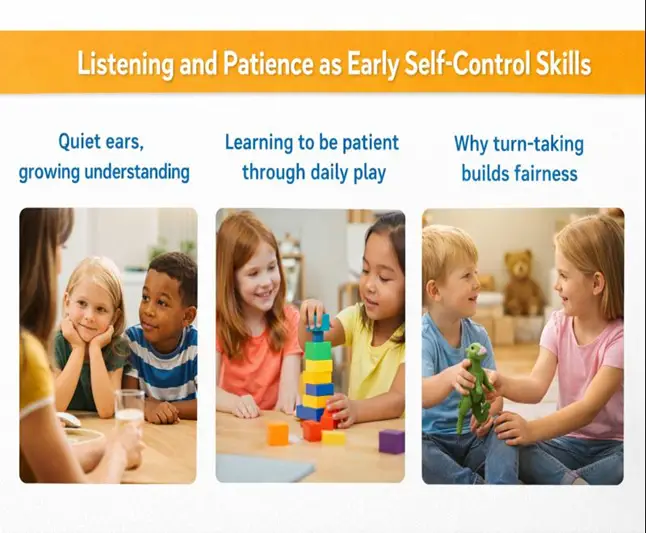
Quiet ears, growing understanding
Learning to listen carefully does not come instantly. Preschoolers are curious and active. Thus, teaching them to listen carefully requires adults to be patient too. Repeat instructions calmly. Model attentive listening. This helps children understand that listening matters. Good manners include the ability to listen carefully to stories or friends. This strengthens good behaviour.
Learning to be patient through daily play
Children learn to be patient when waiting feels manageable. Use board games and snack routines. Use simple turn-based play. Together, these help children practice how to be patient without frustration. Over time, waiting becomes less stressful. It becomes more familiar. Good manners shine when kids be patient. They shine when kids wait your turn quietly. Teaching manners through these games makes good behaviour fun.
Why turn-taking builds fairness
Waiting to wait your turn during group play teaches fairness. IIt teaches emotional balance. Over time, children slowly learn that everyone gets a chance. As a result, this strengthens good manners. It reduces emotional outbursts. Good manners remind preschoolers to wait your turn on slides. They do this during talks too. This helps them help friends. It helps them respect elders by not interrupting.
Social boundaries, empathy, and everyday kindness
This helps children respect others and act each day thoughtfully.
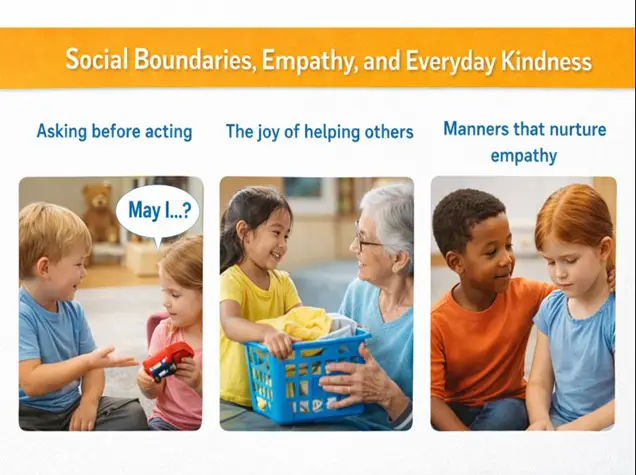
Asking before acting
Preschoolers are naturally curious. This makes teaching them to ask for permission essential. Ask before touching toys or books. Ask before touching artwork. This shows respect. It prevents conflict. Over time, asking becomes a habit. It is no longer just a reminder. Good manners always include the need to ask for permission. As a result, this keeps play peaceful. In addition, kids who ask for permission often listen carefully to answers.
The joy of helping others
Children feel proud when they help friends. They might pick up dropped crayons. They might comfort a classmate. Learning to help friends builds empathy. Good manners grow stronger when kindness is experienced. It should not just be instructed. Teaching manners means encouraging kids to help friends in small ways. This leads to better good behaviour. Preschoolers who help friends also learn to be patient with others.
Manners that nurture empathy
Good manners support emotional awareness. Children begin to notice how others feel. This awareness leads to better good behaviour. It leads to more thoughtful actions during play. Good manners help kids respect elders by noticing their needs. They follow rules to keep clean for everyone.
Respect and responsibility through simple rules
Simple rules teach children respect and responsibility in everyday situations.
Showing respect to elders naturally
Learning to respect elders starts at home. Greet grandparents and teachers politely. Greet caregivers too. This helps children understand respect as warmth. It is not about fear. Respect grows when adults respond with patience. They should respond with kindness. In turn, good manners teach kids to respect elders through daily hellos. They use thank you as well. As a result, this builds good behaviour. It makes kids be patient around older people.
Understanding shared rules
Rules help children feel safe. Children learn to follow rules in classrooms and parks. They learn them in libraries too. Then, they understand boundaries. Clear expectations reduce anxiety. They encourage good manners naturally. Good manners mean following rules calmly. Gentle teaching reinforces this. Kids who follow rules often wait your turn better.
Why keeping clean matters
Teach children to keep clean by putting toys away. Teach them to wash hands. As a result, this supports responsibility. Clean spaces help children feel calm. In turn, they feel capable. Keeping clean is part of good behaviour. It is not just about hygiene. Good manners include the need to keep clean after snacks. Do this after art to show care. Preschoolers who keep clean also help friends tidy up.
Teaching manners in ways that truly work
Young children learn empathy when adults name feelings, read emotion stories, show kindness daily, and help kids notice when friends feel sad or happy.
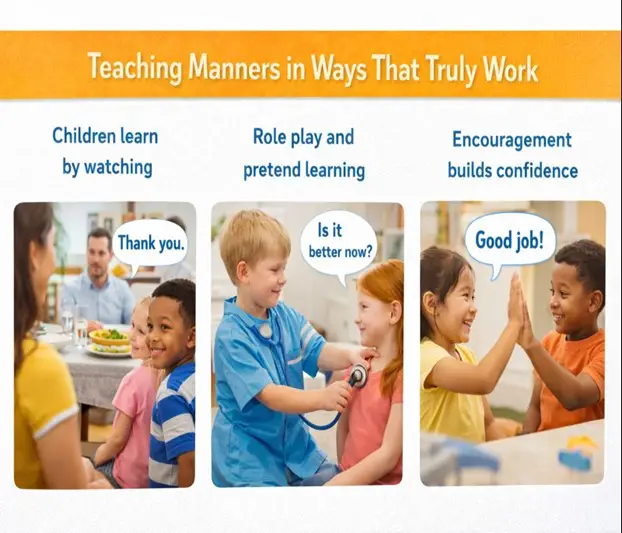
Children learn by watching
Teaching manners works best when adults model them. Children copy tone and reactions. They copy responses more than words. Calm behaviour encourages calm learning. Good manners spread when parents listen carefully. They spread when parents be patient. This leads to strong good behaviour in kids.
Role play and pretend learning
Pretend play is powerful for teaching manners. Use toys or puppets to practice asking. Practice listening and waiting. This makes learning feel safe. It feels playful. Good manners come alive during role play. Children can practice how to ask for permission. They practice how to wait your turn. Teaching manners this way helps preschoolers respect elders in fun scenarios.
Encouragement builds confidence
Positive reinforcement supports good behaviour. It is more effective than constant correction. Praise effort to help children feel capable. It makes them willing to try again. Good manners grow when children are cheered. This happens when they help friends. It happens when they keep clean. Teaching manners through praise makes kids want to follow rules.
Everyday situations where manners grow naturally
Teaching manners in ways that truly work means guiding children gently through daily actions and examples.
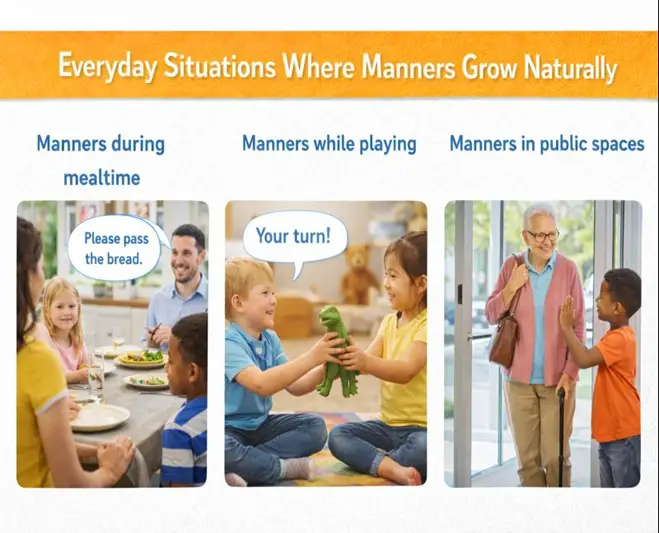
Manners during mealtime
Share food and wait for turns. Use polite requests. Together, all of these reinforce good manners. As a result, mealtimes become calm learning moments. They are not stressful rules. Kids practice how to be patient. They ask for permission. They listen carefully at the table. Good manners make meals enjoyable.
Manners while playing
Play teaches cooperation. Children practice patience and kindness. They listen carefully as they interact with peers. These moments strengthen good behaviour without instruction. Good manners help kids wait your turn. They help kids help friends during games.
Manners in public spaces
Libraries and shops offer chances to practice. Parks do too. Use quiet voices. Be aware of others. Following rules becomes a real experience. Preschoolers learn to keep clean. They respect elders. They learn to be patient in these spots. Teaching manners here feels natural.
Conclusion: Raising confident and kind children
Good manners are not taught in one lesson. They grow slowly through everyday moments. These moments are filled with care and consistency. Teaching manners during early childhood builds emotional strength. It builds social awareness and lasting good behaviour. Parents and educators should focus on patience and respect. Focus on kindness too. Then, children naturally learn to listen carefully. They help friends and respect elders. Small daily lessons shape character over time. With encouragement, good manners become a lifelong foundation. They are more than a temporary rule.
“Check out our 30-Day Interactive Manners Marathon for preschoolers—complete with daily missions, fun games, and printable reward charts!” [Find here]
Frequently asked questions
- What age should good manners be taught?
Introduce them as early as toddlerhood. Preschool years are ideal. Children absorb behaviour constantly then.
- How do I teach patience without pressure?
Helping children be patient works best through routine. First, do not rush. Instead, allow waiting to feel safe.
- Why is listening important?
To listen carefully helps children follow instructions. Also, it helps them understand emotions and connect socially.
- How can I encourage my child to help friends?
Praise kind actions. Also, model helping behaviour daily.
- What if my child struggles with rules?
Use consistency. Use calm reminders. This helps children feel secure while learning to follow rules.