

Counting number is often the very first doorway a child walks through. It helps them begin to understand how the world works. Long before worksheets or classrooms, counting number shows up during play and snacks. These small everyday moments feel ordinary to adults. However, they feel huge too little learners. The journey from saying “one, two, three” to understanding quantity is a major brain milestone. it is a big part of this change.
The goal of teaching counting number is not speed or perfection. The goal is curiosity. Mathematics for preschoolers should feel safe and familiar. Then, little learners explore learning numbers without fear. Counting number becomes a thinking tool, not a test.
What Does a Counting Number Actually Represent?
Beyond the Song: What Every Number Means to a Preschooler. Counting number is about understanding what numbers mean. Each number means something specific. It is not just a sound in a sequence. Children should touch each object as they count. This helps them match one number to one object. It builds the foundation of learning numbers. Teaching number works best when children use their hands. It is more than just using their voices.
In mathematics for preschoolers, touching matters. Pointing matters. Slowing down matters. Counting number becomes physical. Then, children understand numbers better. They learn that number means quantity. It is not just a rhythm.
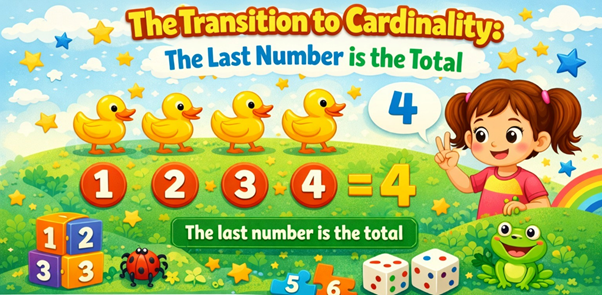
The Transition to Cardinality: The Last Number is the Total
A big breakthrough in counting number happens with a simple realization. The child understands that the last number is the total. This moment may look small. However, it is a big step for the brain. It moves from repeating words to real understanding.
Fun with mathematics quietly supports deeper thinking. This is an “aha” moment. Then, learning numbers starts to feel powerful. It is no longer confusing. Counting number stops being about memory. It starts being about logic.
Building Number Sense Through Mathematics for Preschoolers
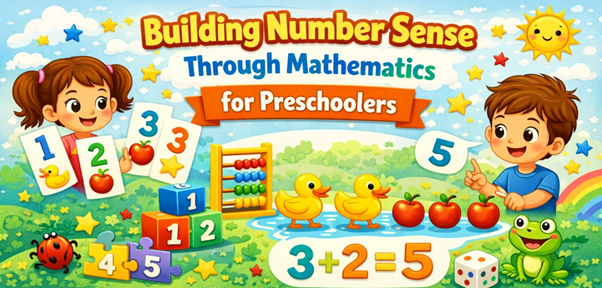
Number sense grows when children recognize small groups. They do this without counting one by one. This ability develops through mathematics for preschoolers. It allows children to see patterns naturally. Counting number then becomes smoother. It is also less tiring.
Subitizing, grouping, and play help counting numbers settle in. Little learners feel confident. They do not feel pressured.
Proven Strategies for Teaching Number Concepts at Home
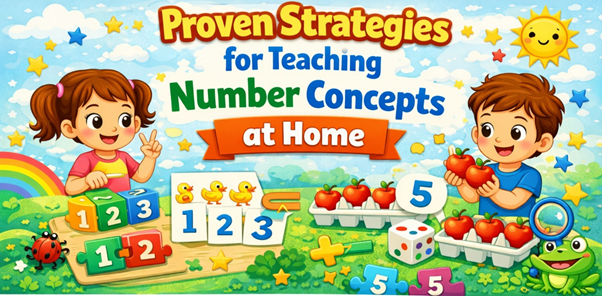
Teaching Number Names and Symbols through Play. Teaching number does not need cards or drills. Children can write numbers in sand. They can shape them with dough. This helps them learn through touch. Counting number becomes a hands-on experience. It is not a mental load.
Children stay curious longer when teaching number feels like play. Mathematics for preschoolers works best without pressure.
Integrating Fun with Mathematics into Daily Routines
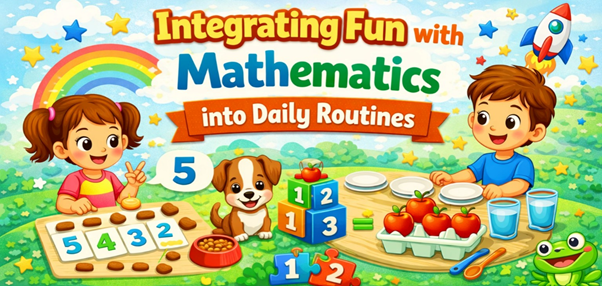
Snack time offers endless counting activities. You can count grapes, crackers, or spoonfuls. This helps children practice counting number without formal lessons. Fun with mathematics shows children that numbers are everywhere.
Why Context Matters for Early on Education
Street signs and elevator buttons help children learn numbers naturally. Door numbers and clocks work too. Adults should point these out casually. Then, teaching number becomes part of everyday talk.
The 7 Best Activities to Level Up Your Child’s Counting Number Skills
Activity 1: The I Spy Counting Adventure
This game keeps bodies moving. Asking little learners to find certain amounts helps them practice counting numbers through action.
Activity 2: Nature Scavenger Hunt for Little Learners
Collect leaves and stones. These blends count activities with play. Counting numbers feels natural. It is not forced.
Activity 3: Musical Numbers and Movement
Jump, clap, and stomp while counting numbers. This supports memory and coordination. Fun with mathematics works best with movement.
Activity 4: Baking and Measurements
Scoop, pour, and count ingredients. This introduces learning numbers through responsibility. Teaching numbers in the kitchen builds confidence. Cooking brings fun with mathematics into daily life.
Activity 5: Toy Line-Up Games
Arrange toys in order. This strengthens counting number understanding. It also helps with teaching number sequencing.
Activity 6: Storybook Counting
Books reinforce learning numbers. They link words and pictures. Counting numbers inside stories feels safe and familiar.
Activity 7: Clean-Up Count-downs
Use counting activities during clean-up. This reduces resistance. Little learners respond better when numbers guide them.
Troubleshooting Common Hurdles in Learning Numbers
Parents wonder why counting numbers feels inconsistent. One day it clicks. The next day it disappears. This is normal.
Why does my child skip numbers?
Counting numbers develops in layers. Skipping numbers is not a failure. It means the brain is still organizing patterns.
How many counting activities are enough?
Short sessions work better than long ones. Mathematics for preschoolers should feel light.
When should formal teaching number begin?
Playful exposure is more important than formal lessons. Learning numbers happens best through repetition and context.
What are the best activities for active children?
Use movement-based counting activities. These work best for children who cannot sit still.
Setting Good Habits for Long-Term Academic Success
Encouraging a Growth Mindset in Learning Numbers. Say “let us try again” to teach resilience. Teaching numbers should never include shame. Fun with mathematics grows when children feel safe.
Preparing for Kindergarten with Advanced Counting Activities
Introduce ideas like more than, less than, and zero. This prepares children gently. Counting numbers then becomes flexible thinking. Mathematics for preschoolers builds confidence when concepts are layered slowly.
Making Counting Numbers a Natural Part of Life
This does not belong only in books. It belongs on stairs and in kitchens. It happens during play and conversation. Fun with mathematics should be part of daily life. Then, children grow into confident thinkers.
Every counted step supports emotional growth. Every shared activity strengthens your connection. For little learners, counting numbers is not just math. It is understanding the world.
Final Thought
Learning numbers today shapes the problem solvers of tomorrow. Counting numbers done with patience builds academic confidence. It also builds emotional security.
Download our printable tracker. Combine daily routines with counting activities. Support consistent growth through the best activities.